
Home » Uncategorized
Category Archives: Uncategorized
Aon giving Goetzel and Wellsteps a run for their money in the integrity department
The misstatements of the latter two have been well-documented in these pages. Simply search on either name, assuming your internet connection has enough “bars” to capture all the content
Lately Aon has been playing catchup. First with Accolade. Then Lyra. Then it got caught (I need to add “allegedly”) taking money from PBMs.
And now, they are claiming that weight loss drugs save money. Coincidentally, they offer a program (meaning take someone else’s program and mark it up) to “help” employers square this circle.
My “observations” on their arithmetic, such as it is, got picked up by The Health Care Blog, so i would encourage everyone to read them there.
Share this:

Aon finally shows their hand. It’s in the cookie jar.
Aon’s claims of savings for the companies such as Lyra and Accolade that retain them to “show savings” appeared to be so obviously fabricated that I thought: “Wow, no actuary could possibly be this stupid and/or this dishonest.”
Then I saw they likely had their hand in the PBM cookie jar as well, allegedly collecting money from Express Scripts to steer Johnson & Johnson to them and not hiding it well enough to avoid being caught. So I thought, maybe they are this stupid and/or dishonest.
But before I actually came out and said: “Aon is stupid and/or dishonest,” I thought I should write to them and ask if perhaps I was the one who was missing something. So I wrote to them on Linkedin and asked to get back to me by Tuesday to correct any mistakes in those analyses linked above.
They apparently read those analyses and did not respond. Just to make sure they had every opportunity to correct any mistakes, I then wrote to their chief actuary on Linkedin on email on Tuesday to give them another extension:

Share this:

GLP-1 Coverage: Dissuade the Curious and Educate the Serious

We are going to take time out from our usual policing of the perps in this field (and if you missed the last one, here it is) to show you something positive:
- you can cover weight loss drugs without breaking the bank
- while at the same time segmenting your population into those likely to fail and those likely to succeed on them
Yep, Quizzify’s Weight Loss Drug Companion Curriculum “dissuades the GLP-curious and educates the GLP-serious.” That is exactly what you want to do. After taking our 27-question Curb Their Enthusiasm introductory quiz covering the downsides of GLP-1s, only those who are very serious about improving their health will continue onto the drugs.
Here is a 5-minute read on how we do this, including our two favorite questions among those 27. If you took this quiz, would you want the drugs? I didn’t think so…
If you prefer the 3-minute version in video, try this https://www.youtube.com/watch?v=FeNQZGRpeNQ
Please put comments in Linkedin, as I now consolidate them all into one place. https://www.linkedin.com/posts/al-lewis-%F0%9F%87%BA%F0%9F%87%A6-57963_every-other-entity-involved-in-weight-loss-activity-7242511398851813376-1xOM?utm_source=share&utm_medium=member_desktop
Share this:

A lesson in valid measurement: Vida vs. Virta
The Peterson Health Technology Institute (PHTI) recently published an exhaustive study demonstrating what we’ve been saying (and guaranteeing) all along: Virta is unique among diabetes vendors in that it actually has an impact, while digital diabetes vendors don’t. (Diathrive, a diabetes supply company, also saves money but supplies are a different diabetes category.)
PHTI did a great job as far as the report went. And Livongo and Omada have accepted their conclusions. By “accepting their conclusions,” I mean declining my bet. Sure, they did some perfunctory whining about not looking at the data the right way yada yada yada in one of those “he said-she said” articles, but at this point everyone (at least everyone with a connection to the internet) knows they lose money.
That brings us to Vida. Until now Vida has flown under the radar screen, but the sound-alike name gives them the opportunity to be confused with Virta. That strategy was coupled with a brilliant two-part strategy regarding the PHTI report:
- Don’t submit any studies to PHTI
- Complain that PHTI didn’t look at their studies.
To the first point, PHTI lists cooperating vendors who submitted articles. (Virta submitted 12 to Vida’s 0.) To the second point, that aforementioned “he said-she said” article notes:
Vida says its diabetes programs are clinically proven to [reduce Hb A1c], as reflected in its body of peer-reviewed publications and the satisfaction of the “tens of thousands of members” who have found success with its diabetes program.
Not to be too semantic here on the latter point, but of course the people “who have found success” with your program will be satisfied. The question is what percentage have “found success.” In their case, according to this article, the percentage who dropped out or were lost to followup or didn’t complete their Hb a1c tests was…hmmm…I can’t seem to find it. Am I missing something here?
Results: Participants with HbA1c ≥ 8.0% at baseline (n=1023) demonstrated a decrease in HbA1c of -1.37 points between baseline (mean: 9.84, SD: 1.64) and follow-up (mean: 8.47, SD: 1.77, p<0.001) . Additionally, we observed a decrease in HbA1c of -1.94 points between baseline (mean: 10.77, SD: 1.48) and follow-up (mean: 8.83, SD: 1.94, p<0.001) among participants with HbA1c ≥ 9.0% (n = 618) .
Bookmark this paragraph because we will be coming back to it. Turns out one could teach an entire class based on this paragraph alone, comparing Vida to Virta. And Part 2 will do exactly that.
Peer Review
Here is the Validation Institute’s summary of so-called “peer-reviewed publications,” in Part 5 of their 9-part series on validity:
Vendors have realized that prospects consider the phrase “peer-reviewed” to settle all debates about legitimacy. Part Five will take you inside the thriving peer-reviewed journal industry to show you how peer reviews are bought and sold.
Often, vendors will brag about being peer-reviewed. Most prospects of vendors will then assume that the data was carefully vetted and reviewed by independent highly qualified third parties before seeing the light of publication because, after all, no journal would ever publish an article that was obviously flawed, right?
Well, certainly not for free.
Indeed, probably 95% of journals have turned article submission into a profit center. The euphemism for this business model is “open access.” Open access means that instead of the subscriber paying to read these journals, the author pays to publish in them. In other words, vendors are placing ads. Livongo at least had the good sense to at least pretend their journal was real, by buying some space in something called the Journal of Medical Economics, which sounds pretty legit, right? Not open-access, right? Um…
Well, Vida didn’t even bother to pretend it wasn’t open-access when they placed an ad (technically called “sponsored content”) in JMIR Formative Research. It actually includes the word “open” in the logo…

…and lest there be any doubt about where their vig comes from, JMIR even publishes their price list, which they call an “article processing fee.”
Also, have you ever heard the phrase “investigator bias“? Well, here is the list of authors and funders. Notice a pattern?
G. Zimmermann: Employee; Vida Health. A. Venkatesan: Employee; Vida Health. K. Rawlings: Employee; Vida Health. R. S. Frank: Employee; Vida Health. C. Edwards: Employee; Vida Health.
Vida Health
Like a real journalist, I reached out to Vida to ask for comments. Here’s what they wrote back:
- We aren’t submitting any comments
- But then we will complain that you didn’t look at our comments
Haha, good one, Al. Actually they didn’t say the second but wouldn’t it be funny if they do?
Share this:

Official Rules for Diathrive $100,000 Challenge
Congratulations to Diathrive Health for achieving validation from the Validation Institute (VI). That itself comes with a $50,000 Credibility Guarantee.
In rare cases of VI-validated organizations – such as Virta Health or Sera Prognostics or Acacia Clinics – I add my own “Best in Show” guarantee and offer a $100,000 reward for a successful challenge.
Any diabetes vendor mentioned in the Peterson Health Technology Institute report (other than Virta, which “won” in that report for its diet/coaching offering, which is not at all competitive with Diathrive) can challenge my statement that Diathrive has better and more validly measured savings than they do on the cost of supplies from a vendor that also incliudes coaching support.
Rosencare, based on the industry-leading results at Rosen Hotels, has achieved excellent results overall with Diathrive, but the specific cash-on-cash savings that are guaranteed would be actual diabetic supply prices offered by a company that also provides coaching.
Here are the terms to earn the $100,000 reward.
Terms and Conditions of Challenge
Selection of Judges
There will be five judges, selected as follows:
- Each side gets to appoint one, drawn from members as of 4/17/24 of The Healthcare Hackers listserve with 1300 people on it, from all walks of healthcare.
- Two others are appointed objectively. That will be whichever health services researchers/health economists are the most influential at the time the reward is claimed. “Most influential” will be measured by a formula: the highest ratio of Twitter followers/Twitter following, with a minimum of 15,000 followers.
- Those four judges will agree on the fifth.
Using the criteria below, judging will be based on validity of the measurement. Measurements deemed invalid, such as those described on the Validation Institute site, are a disqualifying factor the challenger.
Written submissions
Each side submits up to 1000 words and five graphs, supported by as many as 10 links; the material linked must pre-date this posting to discourage either side from creating linked material specifically for this contest.
Publicly available materials from the lay media or blogs or the Validation Institute may be used, as well as from any academic journal that is not open-access.
Each party may separately cite previous invalidating mistakes made by the other party that might speak to the credibility of the other party. (There is no limit on those.)
If a challenger is “validated” by a third party whose alleged outcomes have been invalidated on this site in the past, those other invalidations may be presented to the judges to impeach the credibility of this alleged validation.
Oral arguments
The judges may rule solely on the basis of the written submissions. If not, the parties will convene online for a 2-hour recorded virtual presentation featuring 10-minute opening statements, in which as many as 10 slides are allowed. Time limits are:
- 30-minute cross-examinations with follow-up questions and no limitations on subject matter;
- 50 minutes in which judges control the agenda and may ask questions of either party based on either the oral or the written submissions;
- Five-minute closing statements.
Entry process
The entry process is:
- Challenger and TheySaidWhat deposit into escrow the amount each is at risk for ($10k for the Challenger, and $100k for TheySaidWhat). Each party forwards $10,000 to the judges as well, as an estimate of their combined fees and/or contributions to their designated nonprofits.
- If the Challenger or Service Provider pulls out after publicly announcing an application, the fee is three times the amount deposited.
- The escrow is distributed to the winner and the judges’ fees paid by the winner are returned by the judges to the winner, while the judges keep the losers’ fees.
Share this:
How Quizzify prevented another hospitalization – my own
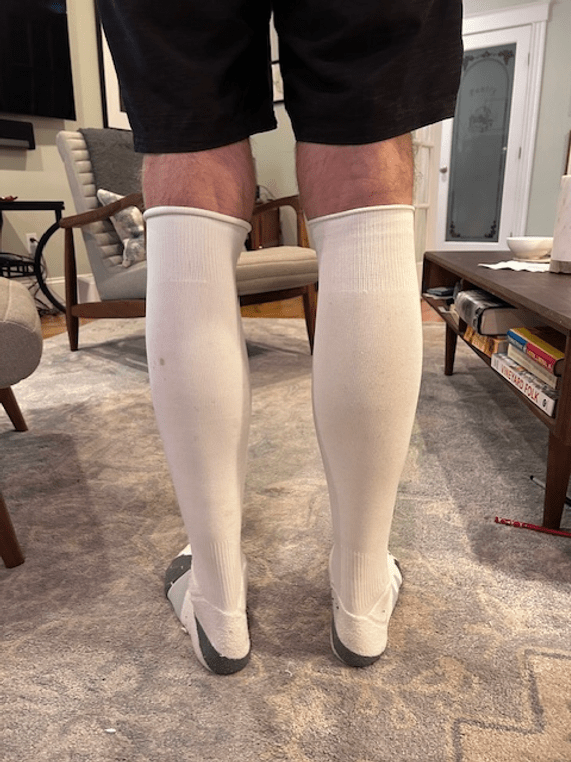
For the second time in four years, Quizzify saved me a world of hurt. This time around was thanks to our Doctor Visit PrepKits, our companion app to Classic Quizzify, our healthcare trivia quizzes.
While the quizzes teach health literacy between clinical visits, the PrepKits teach health literacy specifically for clinical visits. You just enter a keyword, like a symptom, and the PrepKits tell you what you need to know, how to prepare for your visit, questions to ask the doctor and much more.
You might say “Well, our employees can just google on symptoms or ask their doctor.” Unfortunately, if I had just googled on “Swollen calf,” the first hit would be “no cause for concern.” (Try it.) And my doctor was quite convinced the PrepKits’ take on “swollen calf” was rather alarmist, but agreed to see me anyway.
Bottom line: Absent Quizzify2Go’s admittedly alarmist but nonetheless quite accurate advice that I should seek care urgently, I would have ended up in the hospital, with a procedure and a six-month recovery.
See how Quizzify once again saved the day…and turned a likely tale of woe into a minor inconvenience.
https://www.quizzify.com/post/how-quizzify-may-have-saved-my-life-again
And then imagine how many of your employees might have a similar experience. All you need is one, to pay for all of Quizzify.
PS Please put comments on Linkedin – I’ve migrated all the comments there.
Share this:

Those Nutrition Facts labels are, to use a technical term, crap.

There are precisely 3 pieces of useful information on these labels. Everything else ranges from useless to misleading.
And yet how often do you read those labels when selecting a product? And do you ever not believe the information on them? Well, it’s time to start reading these labels critically.
The food companies are “teaching to the test.” They are maximizing the perception that their products are healthy, instead of actually trying to create healthy products. Often the two goals are at odds with each other.
Please do not comment here. I’m taking all comments on Linkedin. This link takes you there, and then if you are still interested, you can link to the full blog post.
Share this:

Oprah’s on Ozempic! Here’s how much that will cost you.

For better or worse, Oprah has been American’s biggest weight loss influencer since the liquid diet fad in the late 1980s. [SPOILER ALERT: That diet didn’t work.]
And now she’s all in for Ozempic. Of course, her regimen also includes significant exercise and presumably enough means to afford a healthy diet, but those nuances will likely be lost on your employees jumping on the GLP-1 bandwagon in hopes of a magic bullet.
Magic bullet or not, never before in the history of healthcare has anything – any drug, procedure, test, anything – combined this much effectiveness, popularity…and cost. Indeed, this single class of drugs will likely add 10 basis points to the overall US inflation rate in 2024. (You heard it here first, folks.)
Assuming you cover these drugs for weight loss, how you manage them will have a significant impact on not just your drug costs, not just your healthcare costs, but actually your entire compensation costs. In turn, private sector companies could feel a margin squeeze of about 1%, as this link shows.
You might say: “Well, we covered them in 2023 and costs didn’t go up that much.” Perhaps, but that was when these drugs were in shortage.
And also pre-Oprah. Holding back the weight loss drug coverage tide just got that much harder.
SPOILER ALERT: This is the ideal use case for Quizzify.
Share this:

Official Rules for Acacia $100,000 Validity/Outcomes Challenge
Congratulations to Acacia Clinics for achieving the highest level of validation from the Validation Institute. That comes with a $100,000 Credibility Guarantee.
In rare cases, such as Virta Health or Diathrive or Sera Prognostics or Ault International Medical Management, I add my own guarantee.
Any mental health vendor (I’m lookin’ at you, Lyra) can challenge my statement that Acacia has the most validly measured good outcomes. Here are the terms to earn my $100,000.
Terms and Conditions of Challenge
Selection of Judges
There will be five judges, selected as follows:
- Each side gets to appoint one, drawn from the Healthcare Hackers listserve with 1200 people on it, from all walks of healthcare.
- Two others are appointed objectively. That will be whichever health services researchers/health economists are the most influential at the time the reward is claimed. “Most influential” will be measured by a formula: the highest ratio of Twitter followers/Twitter following, with a minimum of 15,000 followers.
- Those four judges will agree on the fifth.
Using the criteria below, judging will be based on validity of the measurement. Measurements deemed invalid, such as those described on the Validation Institute site, is a disqualifying factor, i.e., any challenge by a vendor that is not validated by the Validation Institute.
If the challenging party/vendor is deemed by the judges to have an equally valid metric as Client, the decision is made on the impact of the program in outcomes for people with treatment-resistant OCD.
Written submissions
Each side submits up to 2,000 words and five graphs, supported by as many as 20 links; the material linked must pre-date this posting to discourage either side from creating linked material specifically for this contest.
Publicly available materials from the lay media or blogs or the Validation Institute may be used, as well as from any academic journal that is not open-access.
Each party may separately cite previous invalidating mistakes made by the other party that might speak to the credibility of the other party. (There is no limit on those.)
Oral arguments
The judges may rule solely on the basis of the written submissions. If not, the parties will convene online for a 2.5-hour recorded virtual presentation featuring 10-minute opening statements, in which as many as 10 slides are allowed. Time limits are:
- 30-minute cross-examinations with follow-up questions and no limitations on subject matter;
- 60 minutes in which judges control the agenda and may ask questions of either party based on either the oral or the written submissions;
- Five-minute closing statements.
Entry process
The entry process is:
- Challenger and TheySaidWhat deposit into escrow the amount each is at risk for ($100k for the Challenger, and $100k for TheySaidWhat). Each party forwards $10,000 to the judges as well, as an estimate of their combined fees and/or contributions to their designated nonprofits.
- If the Challenger or Service Provider pulls out after publicly announcing an application, the fee is three times the amount deposited.
- The escrow is distributed to the winner and the judges’ fees paid by the winner are returned by the judges to the winner, while the judges keep the losers’ fees.
Other
The competition is open to any mental health vendor outcomes claim which was made before June 1, 2024. This date may be updated by TSW from time to time, and indeed was now just extended to cover the hilarious Aon report on Lyra.
Share this:
Addressing the 3 Pitfalls of Weight Loss Drug Coverage
If you are like most benefits leaders, you are wrestling with the question of whether to cover the new generation of GLP-1 drugs for weight loss, or just for diabetes.
Covering, not covering, and covering with precertification each have major drawbacks. This posting explores those drawbacks…and offers a fourth option, where you can steer only the better candidates to those drugs, to strike the right balance between cost and coverage.
And you can join our joint webinar with US Preventive Medicine (Sept. 7th at noon EDT) by registering here.
Those of you who’ve been reading this blog for years recall the old days of the outcomes-based wellness fad – led by Bravo, Wellsteps and of course Interactive Health – where the “idea” was that if you paid people enough, they would lose weight.
The predictable thing happened: employees gained weight in order to get paid to lose it again. There was even a cottage industry of coaching employees on how to gain weight, with this satirical blog post being (presumably) accidentally clicked on more than 100,000 times by employees googling on “how to cheat in a corporate wellness program.” The “recommendations” in that blog post could harm employees.
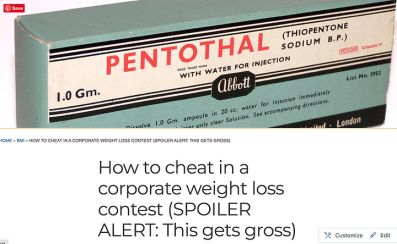
Further, it is much easier to cheat because you aren’t being paid to reach a goal weight, as in wellness. . If your BMI is 28, you need only gain ten pounds and, well, the indication for Wegovy is a BMI of 30…and you would qualify.

 They Said What?