
Home » Uncategorized (Page 19)
Category Archives: Uncategorized
In Kansas City, yet another candidate runs against forced wellness
No sooner did I post Congressional Candidate Runs Hard Against Forced Wellness than I found another candidate doing exactly the same thing.
This candidate, Paul Kramschuster, is running for a school board in Kansas City. Here is his website. Teachers in that city’s Center School District have been harassed and forced into wellness, at considerable expense to their school district — which has nothing to show for it other than bills and annoyed employees. Neither Blue Cross of Kansas City nor Healthmine nor their broker, CBIZ, has been able to demonstrate any outcomes.
While a Republican won an election running against wellness in Pennsylvania and a Democrat is running against it in North Carolina, this Kansas City election is nonpartisan. No party affiliations involved. It appears that independents feel the same way about wellness as Democrats and Republicans.
Here are some tidbits from Mr. Kramschuster’s website:
Another argument made by the district’s insurance broker, which is accepted uncritically by the district, is the recommendation that the district purchase a $70,000 wellness program for the district. The main feature of this program is a blood test and questionnaire asking employees about their drinking habits, their history of disease and what medical tests they have had or plan to have. Most employees do not want this program and would prefer not to have it.
The broker, CBIZ, is collecting a nice fee from the district’s taxpayers, who might have otherwise assumed that their school taxes were being spent on educating their children:
In the early years of this program, employees did not participate, and so in order to induce more employees to participate (by giving up their medical privacy), so as to increase the broker’s profit, the broker recommended the district to pay each employee that gives up her medical privacy
Even the prospect of a bribe doesn’t excite the teachers…
The amount of the payment is $600. In order to receive this payment, many more employees do participate, but they are very unhappy about it. It feels mandatory/coercive, and it feels morally wrong.
…and of course the school board has been completely unaccountable:
No one on the board, or in central office, is asking the critically important question: “How does paying teachers to give up their medical privacy serve students?” The answer, of course, is that it doesn’t — the district is serving its broker, rather than expecting its broker to serve it.
The school board was given the option of swapping out this onerous program for Quizzify, which teachers love (and they would still earn their $600 by learning how to purchase healthcare more wisely) because of its Q&A format.
However, because it would have cost the District only about 1/7th of what the Healthmine program costs, the broker would have made much less money. It was turned down. Taxpayers are now on the hook for the full $70,000, plus the cost of potential lawsuits…
…I did do some checking: the CBIZ/Healthmine program is not validated by the Validation Institute, neither Healthmine nor CBIZ has signed the Ethical Wellness Code of Conduct, and no member of the school board seems the slightest bit aware that this is exactly the type of program that has been proven to be a complete waste of money.
Or that this is exactly the type of program which, on January 2nd, will be disallowed…and will open up the district and its taxpayers to lawsuits from these very same harassed and demoralized teachers.
Share this:

Congressional candidate running hard against forced wellness
In this hyperpartisan era, conservatives and liberals agree on only one thing: forcing employees into outcomes-based wellness programs is one of the worst ideas in the history of ideas. If you scroll down our feature In The News, you’ll see wellness gets equal treatment by right-wing publications like Newsmax and The Federalist as well as left-wing publications like Slate and Mother Jones.
Opposing forced wellness has already propelled one candidate into elective office: Matthew Woessner, whose leadership in Penn State’s faculty revolt against the punitive “pry, poke and prod” plan proposed by Highmark and Ron Goetzel, was elected President of the university’s faculty senate. Matthew is a self-described Republican libertarian.
In keeping with the bipartisan nature of wellness, it is fitting that the first Congressional candidate to take on the wellness industry is, conversely, a Democrat, Jenny Marshall. Jenny (as she likes to be called) is running against Virginia Foxx (R-NC5), who chairs the House Committee on Education and the Workforce. A powerful combination of this lucrative committee chairmanship, lack of ethics and a gerrymandered “safe” district (at least until voters find out about this bill), allows Foxx to “represent” the American Benefits Council rather than voters in her district. Indeed, I suspect she has nary a single constituent who supports employees being pried, poked and prodded into submission. It is not at all clear how this bill would benefit her district.
Any controversy over whether forced wellness saves a nickel or even improves health has long since been laid to rest. Hence, the American Benefits Council’s enthusiasm for forced wellness is all about making programs so onerous and unappealing that employees prefer to pay the $1000 fines rather than be subjected to the indignity and potential harms of being pried, poked and prodded by unlicensed, unregulated wellness vendors.
On the other hand, these programs can be very lucrative for employers, who can claw back large chunks of their insurance premiums forfeited by non-compliant employees. Vendors have already figured out how to offer “immediate savings” for employers through collecting these fines from employees.
Unless Foxx’s bill becomes law, this lucrative, misanthropic, anti-employee loophole will be closed December 31, thanks to the ruling in AARP v. EEOC, which will prevent employers from forcing employees into “voluntary” wellness programs.
Foxx’s HR1313, known colloquially as the Employee DNA Full Disclosure Act, would override this common-sense federal court decision. Worse, it would allow employers to force not only employees but their children into these programs. And not just prying, poking and prodding them, but collecting their DNA as well. Yep, your children’s DNA is fair game if this bill passes. It is so onerous that even much of the wellness industry opposes it, though they stand to benefit from it.
It is headed for a floor vote sometime this spring, having been voted out of her committee on — get ready — a straight party-line vote. (So much for the GOP standing for individual rights.)
Jenny Marshall fights back
Jenny has posted a summary of this bill right on her campaign website. Asked for a comment, she replied: “Foxx’s bill could very well be the worst proposed legislation in the history of Congress. Its intrusiveness would make Orwell blush. I can’t figure out why she would want to invade the privacy of her constituents like this, other than raking in big dollars from lobbyists. For too long now, Foxx has turned a deaf ear to the wants and needs of the people of our district, and for that betrayal should be voted out of her seat.”

You can donate to her campaign
If this bill passes, the very stable geniuses at “outcomes-based” wellness vendors like Bravo, Interactive Health, Wellsteps, Corporate Wellness Solutions, and Staywell will be able to trample employee rights to privacy, fine them and harm them — for no reason other than to enrich their own coffers, and those of their corporate overlords. Absent this legislation, millions will be thrilled to be freed from their anti-employee jihads on December 31 — and employers can find kinder, gentler conventional programs, a la Redbrick or unconventional ones like Limeade (and/or Quizzify, of course) instead.
The way to keep this bill from passing? Vote Foxx out of office. Shed no tears for her. She will get a lucrative job, possibly representing the American Benefits Council in their quest to collect fines from employees — just like she does now.
Only starting in 2019 her paycheck will come directly from them, as opposed to indirectly, as it does now.
The donation link to Jenny Marshall is here.
Share this:

Healthywage is helping Schlumberger employees crash-diet their way to better health
In the wellness industry’s epidemic of very stable geniusitis, Healthywage is Patient Einstein.
Somehow they recruited Russian trolls to convince Schlumberger that the best thing they could do to reverse their four-year stock price decline…

…would be to: encourage their employees to binge and then crash-diet. So far Schlumberger is halfway through its 8-week crash-dieting contest. In case you’re keeping score at home following our initial posting, here are the standings:

Pound Town has lost 10% of its weight in 4 weeks. Figure — as a conservative estimate — the average participant weighed 200 pounds at weigh-in. A 9.86% loss of body weight equates to more than 19 pounds, almost 5 pounds a week. The Centers for Disease Control (CDC) recommends 1-2 pounds/week.
The better CDC recommendations include not crash-dieting at all, but rather improving your health and fitness, at your current weight, because rapid weight loss likely leads to rapid weight regain, and possibly even slows metabolism so that one could regain more than one loses.
However, the CDC recommendations didn’t take into account that weight regain is a big part of what makes this contest work. Employees can win the $10,000 in 2018 — and then regain the weight in order to enter again in 2019. Is this a great country or what?
Health has nothing to do with it, of course. It’s about making Schlumberger shareholders proud again.
Share this:

The NBER invalidation of wellness outcomes: Behind the headlines
There is a lot more to this study than meets the eye.
Just published today in American Journal of Managed Care:

Some tourist attractions feature an “A” tour for newbies and then a “behind-the-scenes” tour for those of us who truly need lives. For instance, I confess to having taken Disney’s Magic Kingdom underground tour, exploring, among other things, the tunnels through which employees travel so as not to be seen out of costume in the wrong “Land.”
Likewise, there have been many reviews of the recent wellness study conducted by the National Bureau of Economic Research (NBER), the first-ever randomized control study of a wellness program. This, however, is the first review to go beyond the “A” tour of the headlines.
By way of background, the headline is that the mainstream wellness program the investigators examined at the University of Illinois did not noticeably move the needle on employee health. They didn’t address return-on-investment (ROI), because there obviously was none. Achieving a positive ROI would require moving the health risk needle—not just by a little, but rather by enough to significantly improve the health of many employees. Then, since wellness-related events, such as heart attacks, would not otherwise have befallen these employees immediately, this improvement would have to be sustained over several years before there was a statistical chance of some events being avoided.
Finally, the magnitude of this improvement would have to be great enough to violate the rules of arithmetic, because it is not mathematically possible to avoid enough medical events to break even on wellness. For instance, it actually costs about $1 million to avoid a heart attack through a screening program.
This finding, therefore, represents an existential threat to conventional wellness programs.
It all boils down to: why would an associate professor (Damon Jones) publicly humiliate his own dean (Katherine Baicker — yes, the very same Katherine Baicker who always seems to be on the wrong side of every wellness debate) …unless he is absolutely sure he is right?
She can’t fire him now because that would get picked up by the lay media. Perhaps she should have paid him $130,000 not to disclose the results.
You can continue to the review here.
Share this:

West Virginia teachers went on strike over…wellness???
Yep.
I cannot make this stuff up. While there were other issues too, here is the article. Scroll down towards the end and you’ll see that getting rid of the wellness program ranked right up there with a pay raise in worker demands, becoming the key issue for them even after the pay raise was agreed upon:
It wasn’t so clear any longer that a pay raise could resolve them. Quite quickly, it was apparent that the union’s membership…would reject the deal. “I live paycheck to paycheck,” Katie Endicott, a thirty-one-year-old high-school teacher from Gilbert, told the Times. Then she recounted the program, mandated by the state’s new health-insurance program, that required teachers to download an app that would check how many steps they took each day.
“If I don’t earn enough points, and if I choose not to use the app, then I’m penalized $500 at the end of the year,” she said. “People felt that was very invasive.”
The irony, of course, is that this is far from the most invasive wellness program we’ve ever seen. It wouldn’t even be subject to the forthcoming rules reflecting the AARP v. EEOC decision. Plus, taking some extra steps is a good idea in general, and especially in the state with the country’s second-highest obesity rate.
Still, the fact that an activity tracking program was considered repugnant enough extend a strike over is Exhibit A that WillisTowersWatson is right: employees hate wellness. Not all wellness, of course, but rather forced voluntary wellness programs just like this one.
Share this:
The Outcomes, Economics and Ethics of the Workplace Wellness Industry: A Review by Tom Emerick
A bunch of months back I published a comprehensive, richly sourced, linked and footnoted review of the three greatest failures of the workplace wellness industry’s leading vendors, consultants and promoters. Those three greatest failures, of course, would be: outcomes, economics and ethics. Hence the title.
The paper is quite uncharacteristically, rather dry, as befits publication in the country’s leading law-medicine journal. However, I’d encourage everyone to download it and at least skim it.
To get you started, Tom Emerick just now reviewed it in Insurance Thought Leadership, so that might be a good place to start. If that catches your attention, then you can link through to the main event. (And, yes, there is a juicy tidbit in there.)
PS The journal issue includes four other articles on wellness too, including one by The Incidental Economist. They couldn’t find anyone unconnected with the wellness industry to defend it, so the entire issue is an evisceration of its shortcomings.
Share this:
Al Lewis — uncut, unedited…and uncombed
Dear Welligentsia Nation,
For some reason there seems to be a ton of interest in the podcast that Josh Luke just did with me. I’m a bit embarrassed because most podcasts are audio and hence I didn’t really gussy myself up in anticipation of video, but nonetheless worth a looksee. Even in the best of circumstances I do look like I just fell off a mountain bike — and that’s after making an effort to look presentable, as in these shots from a couple of trivia contests.
This podcast covers everything you want to know about how wellness got to the state it’s in, how I stumbled into figuring out that it wasn’t working, and how Quizzify arose from its ashes.
Al
Share this:
Two reviews: The Resident and rEvolution
Even more than blowing the whistle on the very stable geniuses in the wellness industry, I love catching people doing something right, partly because it is so rare. This is one of those moments.
Two books that would seem to have little in common are Unaccountable: What Hospitals Won’t Tell You and How Transparency Can Revolutionize Healthcare, by Marty Makery and rEvolution: Turn Crisis into Clarity and Ignite Growth, by Tim Leman, CEO of Gibson, northern Indiana’s largest insurance brokerage. Dr. Makery has never set foot inside an insurance brokerage while Mr. Leman has never set foot inside an OR. (He may or may not have been wheeled in at one point or another but I don’t know. If I did know, HIPAA rules are quite clear: if I told ya, I’d have to kill ya.) And yet these books have share a common thread.
Coincidentally, and why I am writing today about both books, Unaccountable is back in the news because Fox made a very watchable drama out of it, called The Resident. And rEvolution is in the news — my news, at least, because I have been blown away by what I have seen of Gibson’s competence and professionalism.
The Resident
First, a brief word on The Resident. It is a highly watchable medical drama that got a notch-less-than-great reviews only because, unlike in every other medical drama, reviewers didn’t appreciate that the characters are based on real people. There really was a surgeon at Dr. Makery’s hospital known as “Dr. Death” because of his high failure rate, and yet patients loved him because of his bedside manner. And admittedly the show goes over the top:
- While hospitals upcode all the time, vendors of these coding tools don’t distribute brochures titled The Art of Upcoding.
- Revenue-maximization consultants don’t watch patients get MRIs.
- Hospital CEOs don’t have conference calls like baseball’s winter meetings where they propose swapping patients with each other.
- No federal ICE agent has ever dragged an undocumented immigrant out of an intensive care unit. (Not that I want to put ideas in their head.)
[To read the rest, click through to Linkedin]
Share this:
At Schlumberger, Today is Take-Your-Stupid-Wellness-Vendor-to-Work Day.
Once again, having been snake-charmed by HeathyWage, Schlumberger is offering a crash-dieting contest, starting today, January 22.
Once again, they are ignoring every iota of research that says crash-dieting is a complete waste of time. It may also harm you. Once again, they are offering a whopping $10,000 prize to the winning team.

The relevant language from the Wellness Code of Conduct
Here is the relevant language from the Employee Health and Wellness Program Code of Conduct. The language that the group agreed upon — “may have negative effects on their health” — was intended to be as acceptable as possible to what has become an delightfully large Ethical Wellness group:
Research shows that the vast majority of people who participate in weight loss programs will eventually gain their weight back after the program ends. Many will also gain back more than they lose. The weight cycling that occurs with repeated participation in weight loss programs may have negative effects on their health.
It’s also slightly possible that offering a $10,000 prize (for a team of five) could exacerbate the harms of weight-cycling just a tiny bit by encouraging employees to binge, bloat, salt and constipate themselves before the first weigh-in. But no team would ever do that, right? After all, it’s not worth sacrificing your ethics or harming yourself in order to win a measly $2000/team member.
Haha, good one, Al.
The relevant language from Here’s How to Win a Corporate Biggest Loser Contest
On the weigh-in day, avoid the bathroom before weigh-in if you can, and minimize your activity, another big glass of whole milk with your breakfast that contains some salty options will help you retain more water. If you are also going to get your waist measured, drink about half a can of root beer. Sounds gross, but the carbonation and salt will give you are really good belly bloat…If they are measuring your waist, wear some pants that are snug around the waist, or add a tight belt that hits below your belly button, this will create some fluid buildup in your belly area. At this point you should be a big bloated sloshing mess that needs to go to the bathroom really bad. This is the perfect time to get weighed and measured. If you are getting measured, poor posture can get you another inch and a half, so go for it.
To their credit, even the group that gives this advice has a more adult sense of responsibility than Schlumberger and HealthyWage, as they preface a few pages of advice with:
It’s getting to be New Year’s resolution time and many companies will try and “encourage” weight loss with a “Biggest Loser” type contest. Frankly, this is really a bad idea, as it can create all kinds of bad habits and damaging activities by the participants, as they starve, dehydrate and supplement themselves in an effort to win.
The relevant language from Schlumberger’s vendor, HealthyWage
Let’s look at the marketing pitch from HealthyWage, the outfit that runs this contest and epitomizes everything that makes the wellness industry what it is today:

That equates to over 50 pounds per person, in their 12-week contests — more than 4 pounds a week.* This means one of five things:
- Employees are indeed binging, bloating, salting and constipating themselves before the contest to maximize their odds of winning, since losing 50 pounds in 12 weeks would be a Herculean task without a bunch of extra weight that will be as easy to take off as it was to put on, thanks in part to websites that show you how to gain weight rapidly in preparation for corporate crash-dieting contests;
- Healthywage is unfamiliar with the CDC guidelines that recommend steady weight loss at 1-2 pounds per week;
- Healthywage is betting that employers don’t know that the odds of keeping weight off are 1 in 200 for males and 1 in 100 for females;
- Heathywage is counting repeat contestants more than once, meaning that the same employees binge, crash-diet, regain the weight and then do it all over again;
- Heathywage is lying.
Of course, this being the wellness industry, it may be all five.
*How does a 50-pound weight loss compare to other companies? Pfizer won a Koop Award because its participating employees were able to lose — get ready — four ounces. Six if you measure against the two ounces gained by non-participants. In all fairness, Pfizer’s program was not exactly intensive. “Participate” was defined as “open an email with a message in it.” The good news is that opening an email isn’t going to harm anyone.
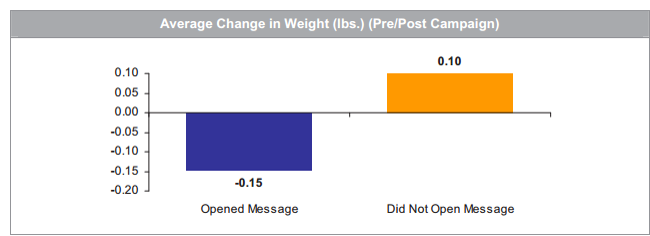
Plus you never know what a message will contain. Open this link to see an example.
Share this:

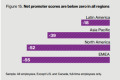
Quiz: Which industry has the worst Net Promoter Score? (SPOILER ALERT: It’s wellness.)
We often talk about wellness vendors competing against one another in a race to the bottom, with the very stable geniuses at Wellsteps, Interactive Health, Total Wellness, and Star Wellness in the lead. Of course, the equally stable geniuses at Wellness Corporate Solutions, Healthywage and Bravo can’t be counted out. There could be other candidates too. Keep in mind that wellness is a crowded industry, with many very stable vendors constantly trying to outgenius one another. (There are, of course, some excellent vendors out there too. Simply put the name of your vendor in the “search” box and see what pops up.)
However, we never talk about the wellness industry as a whole competing against other industries in a race to the bottom. Why not? Because it turns out that the wellness industry has already won that race. How do we know this? Simple. By looking at Net Promoter Scores. Net Promoter Scores are the most widely used, and considered the most valid, measure of user satisfaction. Let’s see how wellness compares to a benchmark of other industries.
The Benchmark: Where are other industries on the Net Promoter Score scale?
Here is a a screenshot of the Net Promoter Scores for the 20 largest US industries serving consumers. (Source: The Temkin Group, which sells comprehensive reports based upon the NPS.)

The worst performer of any industry is, not surprisingly, TV and internet services. The average for that industry is +2. Even so, we have Comcast and I love it. If you want to watch a show — say, Billions — you just literally say “Billions” and <presto> the show appears on your screen. Plus Comcast’s picture quality is now so sharp that every time Paul Giamatti realizes that Damian Lewis has outsmarted him again, you can almost see the steam coming out of his ears.

Nonetheless, the cable TV and internet services industry at least earns a positive score. It’s not that bad.
Where is the wellness industry on the Net Promoter Score scale?
On the other hand, the wellness industry is that bad, according to the data.
Wellness isn’t on the Temkin chart because, thankfully for America’s employees, it is not one of the 20 largest B-to-C industries. It is off the charts both literally, and also figuratively, because the wellness industry Net Promoter Score averages a minus-52 in the US. That’s 54 points lower than the next-lowest industry. (This does not include Quizzify, which is very highly regarded by employees. So much so that one of employees’ biggest complaints is, not enough quizzes.)
This isn’t us or one of the many other wellness skeptics doing the Net Promoter Score measurement. It’s the highly respected consulting firm WillisTowersWatson, whose comprehensive report covers all aspects of the industry.

This rating shouldn’t come as any surprise to people who read this blog, or for that matter people who read at all. Just last week we related a typical employee wellness story, and last year we reposted a few of the comments to the Slate article: “Workplace Wellness Programs Are a Sham,” My favorite, of course, is “I’d like to punch them in the face.”
And also just last week, yet another person — who used their full name — commented on a previous blog, complaining about their “untethered from reality HRA and biometric screen.”
Speaking of untethered from reality, here’s what a wellness vendor — VirginPulse — believes to be the case on their planet:

And there is Bravo, saying punitive wellness programs are:
“very popular and well received by the vast majority of employers and employees alike…”
My question to VirginPulse and Bravo is, where is this “87%,” and/or this “vast majority of employees” who love wellness, and insist on being pried, poked and prodded? We’ve looked in a number of places — here, here, here, here, here, here, here, here, and here — and can’t find anyone.
Oh, wait–yoo-hoo, over here — I found him!
Why this matters
We have a saying: “Wellness will make employees happy whether they like it or not.” In the real world, a minus-52 Net Promoter Score indicates that morale takes a big hit if you do wellness to employees instead of for them. (The Health Enhancement Research Organization concurs with us only on a few issues — the deleterious impact of wellness programs on morale is one of them. )
More importantly, employers, except for Quizzify’s customers and partners, are losing their “Safe Harbor” as of January for tying clinical wellness programs to large financial forfeitures. Aggrieved employees will have much greater recourse in the federal courts than they have today. As the Net Promoter Scores show, there is no shortage of aggrieved employees, and likely no shortage of attorneys willing to “assist” them in collecting a financial settlement.
There is also no shortage of expert witnesses here at They Said What? to support them. And we’ve never lost.

 They Said What?