
Home » Uncategorized (Page 9)
Category Archives: Uncategorized

2020 World Health Care Congress to Feature Wellness Debate!

This is a particularly timely issue because the EEOC is, even as we speak, drafting proposed rules defining “voluntary” to replace the 1984-type rules (where “voluntary” means “forced”) tossed out by a federal court in December 2018. There is a tension between protecting employee civil rights (as EEOC is tasked with doing) and allowing employers to fine employees (or move to high-deductible plans and then “incentivize” them to earn back their deductible) who don’t lose weight or otherwise toe the line. Or even to participate in these so-called “pry, poke and prod” programs, whose clinical value is dubious and often provide misinformation or violate clinical guidelines.
As noted in the link, key EEOC administrators have indicated they will be paying close attention to this debate. Further, the interest level extends to Capitol Hill. Democratic Rep. Jamie Raskin (arguably the most influential non-senior Democrat on the Hill) and Republican Senator Lamar Alexander (who runs the Senate committee that oversees health and labor issues), have already commented for the record on this debate.
Someone needs to show up to represent the “pro” side, though — or else the debate will be a rather one-sided affair. So far the invitation to debate has not been accepted — by the exact people who spend their entire lives looking for forums to spread their pro-pry,poke,and prod message.

Let me encourage them to show up by striking a conciliatory tone.
In the past, perhaps this column has not been respectful of my potential adversaries in this debate — the Health Enhancement Research Organization (HERO) and/or Ron Goetzel. However, I have great regard for them — when they tell the truth. For instance, Ron Goetzel endorsed Quizzify as being “a lot of fun and very clever,” (minute 42:57 of our last debate). And when he acknowledged I am the best peer-reviewer in the industry (minute 30:38). Or when he acknowledged that it requires 2-3 years to reduce risk by 1-2%.
I am also very very upset with The Incidental Economist (they are the New York Times’ economics bloggers). They referred to Ron’s analysis as — please excuse the technical jargon — “crap.” How dare they!
I also give HERO tremendous credit for admitting that “pry, poke and prod” programs harm employee morale and can damage corporate reputations (like Penn State). But most importantly, for admitting that wellness loses money. It’s a rare trade association honest enough to admit their product –and once again, pardon the technical jargon used in the lobbying industry — sucks. It took real candor and courage to do that, and it is much appreciated. I have great respect for integrity.
I will reciprocate by acknowledging the benefits of “pry, poke and prod.” Screening according to established clinical guidelines, though it won’t save money, is a good idea for long-term employee health — assuming someone is able to interpret the findings correctly and assuming the findings are accurate, and assuming they aren’t already getting too many checkups.
I look forward to matching wits with them next month.
You can see the full World Health Care Congress agenda here, and register here.
Share this:


New York Times features our solution to surprise bills!
Dear They Said What? Nation,

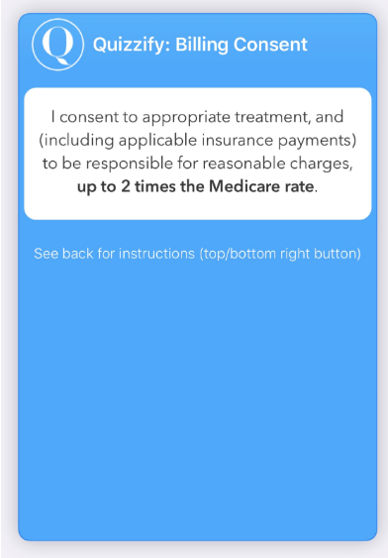
I think most of TSW Nation has already downloaded our custom consent to sign in emergency situations, in lieu of whatever they put in front of you. You can put this consent — along with some other helpful conversation-starters for other medical issues in doctor visits — right into your Apple Wallet. (Android users are out of luck until a future software update in which the Wallet App is added.)
Your Wallet should look like this (I mean, assuming you also bank at Bank of America)…

…and then tap where it says: “Billing Consent” to open this up:
If you haven’t already done so, well, today’s New York Times should be enough to convince you.

We’d encourage you to read the whole shebang but we’d be lying if we didn’t say this is our favorite part:
But, by writing in their own limits, patients might have leverage in negotiations or even in courts if out-of-network payment disputes arise, or at least proof they didn’t agree to pay the total charges, say some advocates and legal scholars.
Patients who try this could still get hit with a large balance bill. But “the difference is you can say ‘I offered this, but they refused it,’” rather than signing the original agreement to pay all charges, said Al Lewis, chief executive of Quizzify, an employee health care education company, who is a proponent of setting your own terms.
He came up with the twice-Medicare benchmark, even putting suggested wording for patients to print and carry with them on downloadable wallet cards, because he says it’s an amount that’s defensible.
If a hospital later turns down “two times Medicare and it goes to court, their lawyer is going to say, ‘We could lose this thing,’” said Mr. Lewis.
And, while I will be very pleased to take credit for inventing the consent in question (no “fake news” in this article!), I do want to give shout-outs to Marilyn Bartlett, David Contorno and Marty Makary. They provided the peanut butter (reference-based pricing) and chocolate (“battlefield consents”) and all I did was combine them.
And thank you to Stacey Richter for being the taste-tester. I was pretty sure this should work, but she was the one who proved it would work. In the immortal words attributed to the great philosopher Yogi Berra: “In theory, theory and practice are the same. In practice, they’re different.”
Not this time.
Share this:


The two most useful free apps ever
Here at TheySaidWhat? World Headquarters, we pride ourselves in advising employers and employees what not to do. That’s our wheelhouse.
And for good reason. Apparently the opposite, our advice on what to do, sometimes backfires. For instance, our most popular post ever, with 12,000+ hits last year along, is an ironic guide to cheating in corporate weight loss contests. It was intended as a gag to show how worthless and harmful these contests are, but has apparently morphed a how-to manual for employees who want to do exactly that. Here are our stats for 2019. No other posting exceeded 6000 views.

Today, however, we are going to shake the what-to-do dice again…and present two tools that are powerful, ridiculously easy to use, free, and unique.
Measure your heart rate just by looking at your iPhone
This amazing app was invented by my former wife’s sister’s son. (Legally speaking, that makes him my ex-nephew-in-law.)
it;s called Hands-Free Heart Rate. All you do is look at it. Yes, just look at it. (You may need to take your glasses off, if that’s not too inconvenient.) And not even 30 seconds later (most of the time) it tells you your heart rate. heartrate@hedronvision.com is the contact info.

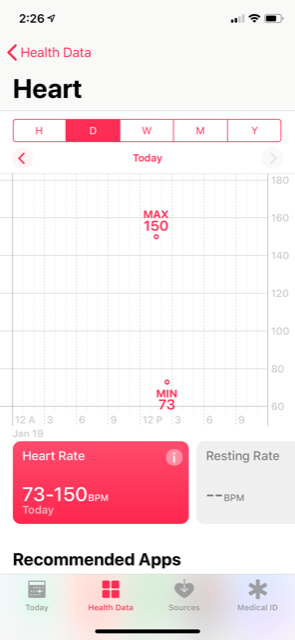
It’s also totally accurate. I’ve benchmarked it on the low and high ends to see if it works across the spectrum of potential heart rates. Pulse is at rest above. Then, the below screen shot is shown after being added to Apple Health. it captured the two data points immediately upon completion of my stair climb, and ten minutes afterwards.
While the coolness factor is quite high, there is also cost-saving potential. Perhaps employees who score 60 or lower on resting pulse can opt out of annual screenings. Screens, however worthless they are when done every year on every employee (against the USPSTF guidelines), are even more of a waste of time and money on healthy people. And it’s fair to say that most people with pulses below 60 at rest are indeed healthy. Or if they aren’t, they have some kind of rare brachycardia issue that a wellness vendor likely can’t even spell, let alone identify. (Maybe wellness vendors should be required to undergo 6 days of training instead of 5.)
Just go to the app store and download it. You won’t be able to look away.
Conversation starters for doctor visits
1000 covered lives will generate roughly:
- 1 heart attack
- 1 admission for diabetes, and…
- 4000 doctor visits
And yet, how much more time, energy and money does your company spend on tilting at those two rare event windmills, which have never been avoided through wellness programs anyway (and vendors don’t track those event rates, so you don’t even know you failed) than on teaching employees how to talk to their doctor? Well, it turns out, there’s an app for that. Quizzify has updated the 5 Choosing Wisely questions that you are supposed to ask your doctor before any test or treatment…and made them downloadable right into your Apple Wallet.
Then, when you are actually in the doctor’s office for anything other than a checkup that you probably didn’t need, you have the questions to ask right on your person.
Of course, in virtually none of those 4000 doctor visits does anyone ever ask those questions, for one of three reasons, all of which are covered with this download:
- They don’t know them (check)
- They forgot to bring them (check)
- They are reluctant to question the doctor (check — see the PS below)
Beyond the basic Choosing Wisely questions (which Quizzify updated), you’ll find the app useful for surprise bill avoidance and for high-cost scans. Those are all freely available. Here is the short version of the Apple Pass for scans. On the back of the Pass is the “long version,” reminding employees of what they learned in Quizzify about why they want to ask these questions.

Long version excerpt (back of Pass)

This will be very useful…but nowhere near as useful as if it is combined with Quizzify’s standard curriculum, which teaches employees the importance of asking questions in a doctor visit. Quizzify customers can get these Apple Passes (and Android equivalents) for Humira, stents, back surgery, antibiotics, MSK procedures, and procedures generally. Basically anything that is controversial, high-cost and frequent. Employees shouldn’t Just Say Yes without understanding why — and whether — they should be saying yes.
Share this:


“A workplace wellness skeptic lets loose.”
Insurance Thought Leadership (ITL) has now picked up the thread. This will likely reach a lot more brokers and consultants.
As usual, I would like to caution that I am not a “workplace wellness skeptic.” There are some programs that have value — typically they are the ones validated by the Validation Institute. We also support “wellness done for employees rather than wellness done to employees.”
Nor are we anti-screening. We are only against inappropriate screening, which is bread-and-butter for many vendors. We are also against stupidity, dishonesty, abuse of employees. and force-feeding of broccoli. All of this puts us at odds with the Interactive Healths, Wellsteps, Goetzels and other actors in this field.
This interview has been insanely popular. I suspect it’s because I finally “let loose,” as the ITL headline says. Taking appellations and kicking posteriors.
So if you haven’t already read it, now is your chance…

Share this:

Surprise billing podcast!
Dear TheySaidWhat Nation,
Occasionally we like to provide actual useful information on what to do, as opposed to what not to do. If it seems like there is vastly more of the latter than the former, that’s because there is.
However, one dramatic gap in the useful information category is how to avoid surprise bills. We’ve written on this topic before, and even offered the free download into the Apple Wallet, as well as cards to be placed strategically where emergencies are most likely. Bikes and motorcycles come to mind. Parachutes as well but if you skydive, you probably have already negotiated a volume discount with your local ER..
This podcast covers some essential elements of our surprise billing solution. Examples:
- Why only emergencies?
- Why does this solution not work in some free-standing ERs…but works in others?
- Why do we set the consent at 2x Medicare instead of 1x or 3x?
PS As long as you are going to be downloading useful tools into your Apple Wallet, might as well add these 5 Questions to Ask a Doctor before any test or procedure.
Share this:

I’m, uh, taking appellations and kicking posteriors
To fire up the base, I’m upping the ante in this HISTalk. Judging from the number of click-throughs to TSW, a lot of people read this blog. (Frankly, way more than read this one.)
If you read through it, you’ll see there are actual people and companies called out. I don’t know what more I can do to get them to sue me. Most have enough sense not to take the bait, but Bruce Sherman stepped up when I observed that he thinks healthcare spending correlates with industrial waste, and that health status correlates with healthcare spending and that wellness programs can improve health status and — connecting the dots — wellness programs can reduce industrial waste. Here are his exact words:
Similar cross-sectional data linking workforce health with work quality have been reported in a manufacturing firm, where average employee healthcare costs (as a proxy for health status) correlated directly with waste production as a percentage of final stock value across 5 locations,22 …. At a location-specific level, using annual revenue per employee estimates, differences in healthcare costs of $1000 per employee were correlated with higher quality sufficient to increase stock value production (and therefore, revenue) by $2000 per employee.
I can’t quite figure out what this means. Read verbatim, it seems like higher healthcare costs are associated with more revenue, but I think he means lower healthcare costs, and just accidentally said the reverse of what he intended to say. He said “employee healthcare costs correlated directly” when he meant to say “correlated inversely.” An honest mistake. Could happen to anyone (in the wellness industry, that is).
The two may or may not correlate positively or negatively, but that’s like saying growth in the population is correlated with my age. The two move in tandem, of course, but have nothing to do with each other. Healthcare spending is driven by many things, of which health status, which itself is driven largely by social determinants, is only one. Local pricing/contracting, outlier events, surprise bills, aggressive providers and overdiagnosis/overtreatment, composition of the workforce…all those drive healthcare spending much more.
But now let’s take the next step and connect all the dots to say that a “pry, poke and prod” program will somehow reduce industrial waste. This is a key part of the argument. Otherwise, it’s just academic.
If anything, one might argue the conventional “pry, poke and prod” wellness bag of tricks increases industrial waste. Cajoling employees to reduce their blood sugar will make them more sluggish, urging them stop smoking will annoy them, and trying to make them lose weight encourages cheating. (By far the most popular TSW post is How to cheat in a corporate weight loss contest. ) Hard to see how sluggishness, nicotine withdrawal and dishonesty — not to mention all the time being screened, and following up on false positives with doctor appointments — reduce industrial waste, but maybe I’m missing something.
I did in fact say that Dr. Sherman believes that prying, poking and prodding reduces industrial waste. And in an offline conversation, where he asked for a retraction, I offered that retraction — provided he publicy admits that there is no way prying, poking and prodding employees can reduce industrial waste. Or even that conventional wellness could never reduce industrial waste but that creating a better workforce culture might do that. That way I’ll know I misunderstood him…and would be happy to apologize.
If you haven’t already done so, by all means read the interview. You’ll want to pop some popcorn and settle into your Barcalounger, because interviews don’t get more entertaining than this one.
Share this:
Our best-ever idea for employee health
Here it is. Get ready:
Eat more broccoli.
Not!
The real idea is that we’ve (“we” in this case is Quizzify, though normally this blog represents only my own views) taken the 5 classic questions to ask your doctor before a test or treatment…and made them downloadable into an Apple Wallet. Just scroll about 2/3 of the way down the Quizzify landing page using your iPhone and you’ll see this. Click “Add to Apple Wallet.”

And since some people (including myself) are reluctant to question those authority figures wearing white, we anticipate that with the last line of the version in the Wallet: “If you’re reluctant to ask these questions, blame us!”
This will work best in conjunction with Quizzify. We have a lot of quiz material on questions you might ask about specific tests and procedures…and we have questions reminding people to ask these questions generally.
You may also want to do this in conjunction with posting the actual Choosing Wisely poster in break rooms:

One might ask: “This is such a screamingly obviously good idea. Why didn’t anyone in the wellness industry already think of this, given how enamored they are of sending employees to the doctor for no reason other than to brag about how many employees are sick?” Except that I can’t answer snarkily because I didn’t think of it either. Credit goes to Quizzify’s tech guru, our “Millennial-in-Chief.” He built the infrastructure to download our surprise-billing avoidance consent form into an Apple Wallet, and then suggesting adding this too.
Share this:


Was Livongo’s “peer-reviewed journal article” really just an ad?
Here’s how an ad gets published. It’s a two-step process. I will lay it out so that even the dumbest member of the media who somehow missed this the first time when they swooned over Livongo’s outcomes can understand it now:
- Your employees and their colleagues write it.
- You pay to have it published.
Now, let’s look at what Livongo just published, touting their own outcomes, to see how, if at all, it differs from an ad.
- Their employees and colleagues wrote it.
- We covered this last time we wrote about Livongo. The article was written by Livongo employees, assisted by Eli Lilly employees. (Eli Lilly funded the study.)
- They paid to have it published.
- We missed this the first time around. Our excuse is, so did quite literally everyone else who covered the story. And “covering stories” isn’t our Day Job. We aren’t journalists. We don’t even play them on TV. We’ve never even watched journalist shows on TV, unless you include Superman reruns. Livongo seems to have a lot in common with that show, transparency being their kryptonite.
The journal is called the Journal of Medical Economics. Sounds really prestigious, so points for that. Yet virtually no other journal article cites articles in this journal, giving it an Impact Factor south of 2. (New England Journal of Medicine gets a 70.) Turns out there’s a reason no one cites it. Here’s how you get published in it. You pay them money.

They would say, yes, but we got it peer-reviewed. To which I say, apparently you didn’t in any meaningful sense. A real peer reviewer would have found and questioned all the fallacies in their article, rather than rubber-stamp some very sketchy “findings,” which for convenience’ sake are all catalogued in one place.
There is nothing wrong with advertising your outcomes, as long as your ad is labeled as an ad. You often see airline magazines with entire sections advertising various cities, using articles and pictures. But they are always labeled as ads. If you don’t do this, there is always the slight possibility, however remote, that someone doesn’t do the research to figure out that in fact this publication was pay-to-play. If that were to happen, you might see a headline like this:

Whereas a more accurate headline might read: “Livongo Pays for an Article to Claim Its Product Works.”
Update January 3: Someone contacted me to say that the correct term for paid highly information advertising is “Sponsored content.” This term would apply perfectly to Livongo’s self-generated, self-published study. They should relabel it as such.
Share this:

Surprise billing legislation blew up yesterday!
Surprise billing legislation blew up yesterday.
This means as we enter the 2 weeks with the most emergencies this side of July 4, you are at risk of being snookered in an emergency admit or visit or delivery. However, you can now download this consent language and instructions on use right into your Apple Wallet (sorry, Android users — not your day in the sun yet)
The same link has our paper version, with 8 wallet-sized cards. Print the page and slice it into 8 cards. (The good news is that since the ER can’t overcharge you if you carry these cards, you don’t even have to be careful with the scissors.)
Share this:

Announcing the 2019 Not The Deplorables Awards
This year we are not naming winners of the Deplorables Award, lovingly bestowed in the past on vendors best exemplifying the wellness industry’s commitment to cluelessness. This is largely because wellness vendors have finally learned to operate in the shadows. Of course, the usual suspects — previous, multiple Deplorables Award-winners like Interactive Health and Wellsteps — are still fabricating outcomes and harming employees. The difference this year is that they have finally learned that snookering employers works best if they don’t actually announce that they are snookering employers.

They have enough sense not to engage, so as not to create a news cycle…which they will invariably lose. For example, watch how Ron Goetzel won’t respond to this:
“Ronald, I’ve documented 14 statements you made in one 45-minute period that look an awful lot like lies. Care to clarify or dispute any of them? If not, we’ll assume they are lies.”
And if you look in the comments below, or on linkedin, you’ll see…nothing.
One might wonder why this simple lesson has taken these people so long to learn, but in their defense it could be noted that many politicians have yet to learn it at all.
Diabetes vendors, Livongo in particular, have proven to be faster learners. They figured out that if data goes in the wrong direction, you simply don’t report it. No one other than yours truly here will notice, and I can’t highlight their failures if they don’t blab them. Specifically, the two most important outcomes metrics in diabetes management are insulin use and primary-coded diabeties admissions. While they reported some rather contradictory and squirrelly “results” for other things, somehow they “forgot” to report on those two variables.
As a result, all the media attention directed at them has been of the reprint-the-press-release variety rather than the Woodward-and-Bernstein approach. I tried to add my two cents but didn’t get sufficient attention because Livongo was wise enough not to voluntarily disclose the self-incriminating data.
Now for the good news: many organizations and individuals have distinguished themselves this year by actually adding value — basically doing the opposite of what Deplorables Awards winners do. It’s been so long since I’ve reported good news in this column that I’m not sure what the opposite of “Deplorables Awards” is? The opposite of Deplorables might be “Human Scum,” but upon careful consideration, deliberation, and focus-grouping, I’ve decided that might not be an appropriate name for an award.
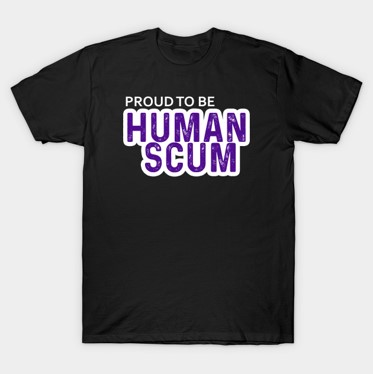
So I have no idea what to name these awards collectively, other than Not The Deplorables Awards. (And a few awards below have their own monikers as well.)
Note that it isn’t enough to be on the right side to earn this accolade — you have be high-visibility too, and willing to take public stands that might get some people annoyed with you.
And the envelopes, please
First, the Validation Institute. “Are you validated by the Validation Institute?” is becoming a common phrase. (It helps that their most recent webinar attracted 1300 registrants.) Some organizations, like Comcast, won’t even consider a non-validated vendor that can’t explain why validation doesn’t apply to them.
Some vendors will respond: “We don’t need to be validated because we hired an actuary to validate our outcomes.”
Here is a newsflash: The sentence: “My client saved no money at all” has been announced by no actuary ever. You pay an actuary to claim savings, not to measure them. This is true matter how obviously they are fabricated.
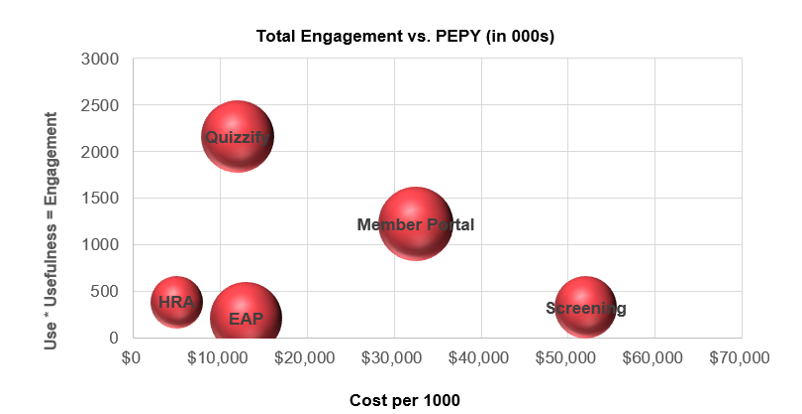
The VI has also created the single most elegant, easily implemented, and valid tool to measure the cost-effectiveness of various benefits. No tool has ever done that at all, let alone freely and easily. You simply ask employees “How many times if at all did you use this benefit?” and “Was it useful?” Multiply those two scores together to get an engagement index and graph that against the cost of the benefit. The most cost-effective benefits will demonstrate high engagement at low cost, in the upper left. (The size of the bubble scores an optional third question: “Does offering this benefit enhance corporate culture?”)
Second, the companies that have achieved validation. While many companies have now reached this milestone, these awards would specifically go to Virta and IMHealth in diabetes and US Preventive Medicine in wellness. The reason is that they have achieved legitimate outcomes in industry segments in which most of their competitors have not.
Third, Quantum Health would get the Cal Ripken award, for six consecutive years of winning validation at the highest level, which is actual savings achieved.
Fourth, the authors, of which there were no shortage this year:
- The John Dean award goes to Professors Zirui Song and Katherine Baicker, who did exactly what scientists are supposed to do, which is design, conduct and report legitimate experiments instead of fudging the data to show that their initial conclusion — in their case, certainly the most consequential initial conclusion ever — was right. By proving that “pry, poke and prod” is an epic fail (at least for the first year, and it’s hard to imagine a dramatic turnaround in subsequent years), they did the honorable thing, even though it meant invalidating their own previous work.
- The Hire-a-Food-Tester award goes to Marty Makary, whose blockbuster The Price We Pay exposed some mind-bogglingly scandalous behavior by providers harming employees with surprise medical bills and lawsuits. Runner-ups in the authors-of-actual-books department (only because Marty’s is tough to beat) include Jeanne Moore and Zeev Neuwirth.
- Marilyn Bartlett wins the Miss Noncongeniality Award for forcing most of the hospitals in Montana to accept reasonable fees benchmarked to Medicare, saving the state tens of millions. Were she to help other states achieve the same outcomes, the complexion of the entire provider industry would change. Large private-sector employers, and carriers, would start demanding the same rates.
- Joe Andelin, who has published several analyses blowing up conventional wisdom about savings from wellness.
- Lisa Woods, Jonathan Slotkin, Ruth Coleman for documenting mind-blowing rates of inappropriate spinal fusions
- Medencentive, whose published analysis combined both validity and savings, which (aside from Quantum Health) has never happened in employee health services
Fifth, the Joe Hill award to AARP, for representing low-paid hourly workers being abused by Yale University’s wellness program. “Abused” may seem like a strong word, but forcing an employee who has had a double mastectomy to choose between getting a mammogram or being fined up to $1300 might qualify as such.
Sixth, the Tesla 0-to-60 Award goes to Tom Scott, who, from a standing start at the 2018 World Health Care Congress, created the first and most popular full-credit, full-semester course on next-generation health benefit design and administration.
Seventh, the Jacob Riis Award goes to Jon Robison, who never misses an opportunity to point out the fallacies in wellness vendor claims. Those pile up so fast it’s amazing he has time for his Day Job.
Eighth, the Edward R. Murrow award to the podcasters. Podcasts are the new way of reaching people, and exposing “pry, poke and prod” programs seems to be a popular topic. In no particular order, they are Reconstructing Healthcare, Workplace Injury Prevention, Stacy Richter, Josh Luke, Jen Arnold, Zeev Neuwirth, Jeff Bernhard, Michael Andrade, Matt Jeffs.
Then, in the not-really-a-podcast category, hosts who get the message across in 3 minutes or less include Fred Goldstein and Wellable’s NIck Patel.
NInth, the First Amendment Award goes to Brian Klepper. Brian has compiled a listserve of almost 1000 disruptors where folks like me learn we are not alone in the universe. To join the listserve, you can reach Brian at brian.klepper@validationinstitute.com.
Tenth, the Grownups in the Room. These are people who, despite running high-visibility organizations that are susceptible to criticism, are completely willing to take unpopular stands when the facts merit it, and have clearly moved the needle.. Leah Binder, Chris Slezak, Jessica Brooks, Neil Goldfarb, Christie Travis, Lisa Morgan, Larry Boress, Bob Smith, Lisa Slavinski, Tina Bowling, Jeff Hogan.
Eleventh, the Nero Award goes to…me. Not for the things I generally excel at, like measuring wellness outcomes, writing heathcare trivia questions, or being tall. Rather, specifically for combining the insights of the aforementioned Marilyn Bartlett and Marty Makary into the first-ever on-the-spot solution for avoiding surprise medical bills for emergency care. The good news is that, following our heavily subscribed webinar (viewable here) on this topic, several hundred people have downloaded this solution. The bad news is, that means several hundred million people haven’t.
And, finally, what would a list of Not the Deplorables Awards be without: The Daves? Dave Chase and David Contorno have used their bully pulpits to influence large numbers of brokers to negotiate better deals on behalf of their customers that also dramatically reduce deductibles and copays. Mr. Contorno’s latest linkedin post got more than 200 “likes,” which implies about 50,000 views. Remind me never to get on his bad side.
By contrast, I am thrilled to be on Ron Goetzel’s bad side. And in all fairness, he has responded to the 14 apparent lies. Not by disputing them (which is what I am offering the chance to do now) but by acknowledging them. The only point he disputed, in the comments, was a true statement. He said on tape he found Quizzify to be “a lot of fun, very clever.” But now he claims that when he said that, he didn’t mean it.
Make that 15.
PS I think you can order both t-shirts from the same company. Is this a great country or what?

 They Said What?