
Home » 2020 (Page 3)
Yearly Archives: 2020

What is the single most unnoticed corona risk?
Dear They Said What Nation,
We are all corona all the time now.
Here is our latest coronaquiz, and all our previous coronaquizzes, now all in one place. These are all freely sharable (with attribution, please) to get the word out. This latest quiz covers, among other things, the unexpected greatest hazard of grocery-shopping. Normally we would tease this to get more click-throughs, but we are actually going to give you the answer here both because desperate times call for desperate measures and also we are already getting tons of click-throughs.
The answer is: the handle of the shopping cart. Imagine how many other people have been grasping that handle all day. You’re distancing yourself from other shoppers, using self-checkout, shopping at off-hours…and yet you are physically embracing the #1 item — hard plastic — where the virus survives the longest.
Fortunately, for just that reason, my local Stop & Shop thoughtfully provides a dispenser of wipes…

…so you can disinfect your hands before you wheel your cart out into the parking lot.
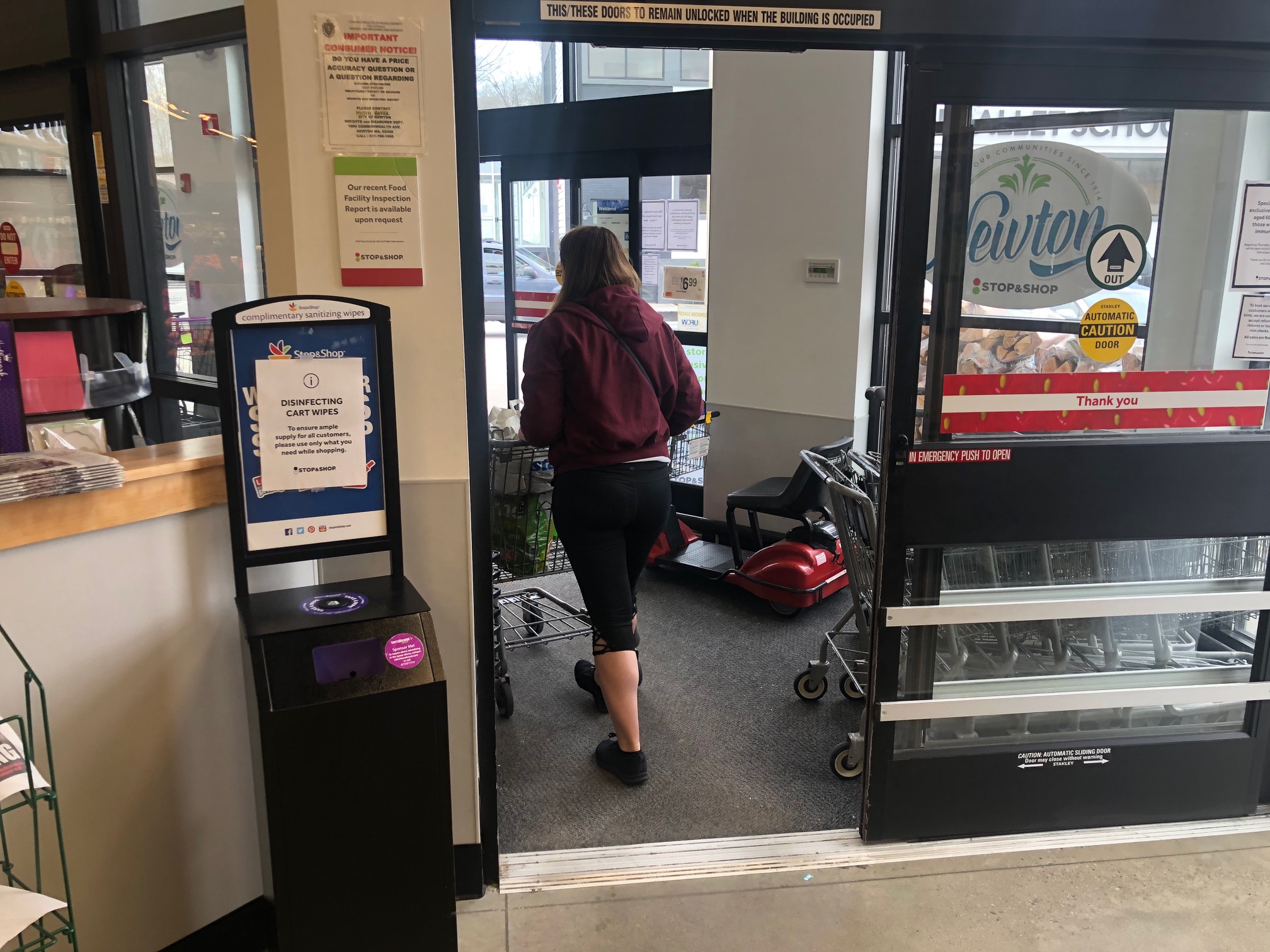
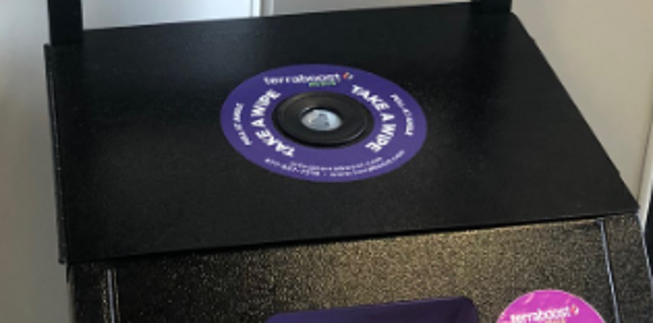
In my opinion, it would also be helpful if the dispenser actually contained wipes, but maybe that’s just me.
A special shout-out to the organizations that have stepped it up in this crisis by making these quizzes easily available to members
Among wellness vendors, these quizzes are being made easily available by Sonic Boom and US Preventive Medicine. (Now let’s not always see the same hands.)
Among wellness trade and professional organizations, by National Wellness Institute and WELCOA. (HERO is apparently still pursuing a more traditionally broccoli-centric agenda, though they did thank us graciously for our offer to share our quizzes with their members. Not.)
But the biggest shout-out goes to Melissa Burkhart and the gang at Futurosolido. At considerable expense, they have made Spanish versions of the first two quizzes available on Quizzify and their own http://www.futurosolidousa.com websites.
Share this:


New quizzes, new webinar–ask the virology expert
Dear They Said What Nation,
Here are two updates for you.
First, on Tuesday you will have an opportunity to query arguably the country’s leading authority on corona, as profiled here in the New Yorker. (Disclosure: he is my brother-in-law.) Yes, the Validation Institute is doing a webinar on Tuesday at 2 PM EDT– as a Friend of Al, it is free if you enter PRESS in the promo code. His name is Dr. Ian Lipkin, the John Snow Professor of Virology and Immunology at Columbia. If you recognize the name, it’s because he’s on TV fairly often.
Examples of rumors floating around the internet that you might ask him about: can you get re-infected? Are there two strains? Does the virus mutate? Could hydroxychloroquine prevent it? (This is a real thing — it sounds like something would make up.)
Second, two employee Q&A sets are now available. The original one is now updated — lots of material can change in two weeks. So if you haven’t circulated this one yet, now is a good time.
The sequel is still good to go. It covers why your employees might want to color their fingers like this.

There have been a zillion hits — we are allowing complete reuse of it with nothing other than attribution required.
Share this:

6 easy ways to reduce coronavirus risk you didn’t think of
There are certainly ways to avoid coronavirus risk altogether, such as isolating yourself. But sometimes you just have to go to work, or interact with others. While you should be very concerned, keep in mind that in the last 30 days there have been many more cases of and deaths from the flu than coronavirus, though that could certainly change in a future month.
At this point, if you are reading this, you know the basics about hand-washing, not touching your face etc., but maybe there are 6 simple risk-reduction “hacks” you are not aware of.
(1) Mark your fingers like this
Use an indelible marker or tie a string or rubber band around your fingers, especially on your right hand. This will remind you not to shake hands, and to wash your hands or sanitize them if you do. If you are left-handed, you should probably do both hands.
(2) Use humidifiers at work
Most workplaces are very dry. Viruses can stay airborne longer in dry air. (Winter air being drier is thought to be one of the reasons flus are seasonal.) To oversimplify, the viruses attach to water droplets and fall to the ground faster in humid air.
Nor do you want to overdo it. If the air feels humid, it’s probably too humid. Other pathogens — molds in particular — thrive in moist areas. However, very few workplaces have this problem.
(3) Avoid contact with hard surfaces
One would think that viruses would live longer on soft, cushy surfaces than hard, shiny ones. That’s quite counter-intuitive. If you met someone for the first time, you would certainly open their door, but you wouldn’t jump into their bed. (Cue sophomoric joke here about swiping right.)
And indeed beds and other soft surfaces do harbor all sorts of other microscopic life forms, most of which wouldn’t harm you or we’d all be extinct by now. For instance, you should swap out your pillows every year or so because dust mites like to set up housekeeping in them. But for cold, flu and coronavirus, it’s the hard, shiny public surfaces that will get you.
(4) Reduce the number of hard surfaces in public places
Prop open doors. Door handles (or pushing on revolving doors) are probably the #1 surface that people come into contact with, without thinking twice about it.
Obviously, this isn’t always practical. One could do it for the break rooms but perhaps not the restrooms. In that case, perhaps wrap tape around the door handles. Viruses die sooner on softer surfaces, and since people think of softer surfaces as carrying more germs (they do – just not coronavirus), they will be more likely to wash afterwards.
(5) Check the ingredients in your hand sanitizer
Good old-fashioned alcohol should be the main ingredient — at least 60%. Many, for aesthetic reasons, prefer better-smelling or faster-drying active ingredients. Those will offer some protection, but alcohol rules.
(6) Play the Quizzify coronavirus quizzes…and send them to your employees
The first covers the basics. It was profiled yesterday (March 9) in Employee Benefit News.
Like with The Pink Panther and arguably The Godfather and National Lampoon’s Vacation, the sequel — which is just coming out now — is better than the original.
Share this:


Six Things Employees Need to Know about the Coronavirus

Once again, we will be re-posting from Quizzify. This post also turned out to be very popular and we even incorporated a couple of extra suggestions from readers to update the blog post. We will also have some quiz questions available next week.
Here are Six Things Employees Need to Know about the Coronavirus
Highlights for those who don’t want to click through (though we aren’t contagious):
- wash your hands for 20 seconds at a time
- unless you recently washed them, keep your hands away from your nose and mouth
- your odds of getting the flu are vastly greater than getting coronavirus, at least for now — even if you had the flu vaccine (though that is a good idea in general)
- facemasks don’t work
- there are no magic potions or other preventive formulas
- go about your everyday lives
That’s the information for now. Check back next week. We might have question sets to distribute.
And the emphasis is on “for now.” In the immortal words of the great philosopher Yogi Berra: “It’s tough to make predictions, especially about the future.”
Share this:


Six things employees should know about nutritional supplements
Dear They Said What? nation,
Occasionally we re-post from Quizzify here. This particular posting was quite popular, so we thought it worthy of a repost. Also quite popular on The Skeptical Cardiologist, which is one of our favorite blogs. If I knew how to create a blogroll, they would be on it.
The majority of your employees take nutritional supplements, whose consumption just reached an all-time high. That increase means someone, somewhere – maybe even your very own wellness vendor – is telling them this is a good idea.
Or maybe they are thinking: “Hey, what harm can they do?”
Plenty, as it turns out. Here are six things employee should know about nutritional supplements. In the case of close calls, we yield to the optimistic views of the supplementarians, on the theory that they are more likely to whine and we don’t want to get into any he said-she said comment fights with them.
1. Most benefits of supplements with none of the risk can be achieved with a regular multivitamin
There is plenty of evidence for the health benefits of virtually all vitamins and minerals and even a couple of supplements, so much evidence that we have room to highlight only a few.
Examples include fish oil for menopausal women with dry eye or possibly people at high risk of heart attack. Or folic acid for pregnant women and iron for pregnant women who are anemic. Or Vitamin D for people who have dark skin, live in cloudy climates, avoid all sun exposure and/or don’t each much dairy. And of course, Vitamin B12 for vegans. (Vitamin B12 is found only in animal products.)
Women likely benefit from small combined extra amounts of calcium and Vitamin D…but as noted below, don’t overdo it.
The 10% of the population who drink to excess really should be taking daily multivitamins. This is partly because alcohol interferes with absorption, and partly because they aren’t getting enough calories from real foods.
30-second shameless plug: this is where Quizzify comes in. Most heavy drinkers — like most other employees with something to hide — lie on health risk assessments (HRAs). About 3% of your employees will admit on an HRA they drink too much, whereas in reality the top 10% of adults consume 73 drinks/week. Even assuming the HRA provides correct nutritional advice (most don’t), 7% of your employees who need this advice won’t receive it.
Quizzify, on the other hand, specifically asks and answers the trivia question: “What extra vitamins should you take if you drink heavily?” So the other 7% get this valuable information…without needing to disclose their drinking habits.
With these exceptions, most people should be getting enough vitamins in a balanced diet, but a few cents a day of an “insurance” multivitamin pays for itself just in the psychological benefit of not worrying about that. However, the story changes when we talk about megavitamins, and especially when we talk about other supplements.
2. Almost every megavitamin which once showed “promise” in fighting cancer, heart disease, etc. doesn’t. Quite the opposite, they may cause harm.
Niacin, once thought to have magical properties against heart attacks, has been completely debunked. Vitamin E supplements could prevent cancer in some women but cause it in others, depending on genes. Men who are concerned about prostate cancer (meaning all of us) should specifically avoid Vitamin E supplements, which likely increase the odds of it. Vitamin D in large quantities is the latest to be debunked, just last month. Taking too much may cause osteoporosis, rather than prevent it.
As with anything else for sale on the web, there is a business model here that may not always be in the consumers’ best interest. This is particular true for Vitamin D, where the “Doctor” who touts the stuff the most gets paid handsomely by the industry. He thinks the dinosaurs didn’t die due to the asteroid that hit the earth. He thinks they died of a Vitamin D deficiency due to the lack of sunshine afterwards.

And monitor your own wellness vendors. Interactive Health, for example, tests every employee for anemia. (See “Interactive Health breaks its own record for stupidity.”)
This is contrary to the advice of clinical guidelines, which oppose anemia screening except for pregnant women, where evidence is mixed. Employees who then take iron supplements risk stomach pain, nausea, vomiting and serious long-term complications.
The good news? It is just slightly possible large amounts of Vitamin C do offer modest benefits with respect to common colds, and that those possible benefits outweigh the possible harms. But just large amounts, like 200-400 mg., not massive amounts. Not the 1000+ mg. that the proponents tout.
3. If you have to go to GNC to obtain a supplement, or order it through the mail, it has no value and may cause harm.
CVS and Whole Foods want to make money too, and fancy supplements are expensive, high-margin items. So if a supplement has even the slightest inkling of value, they’ll stock it.
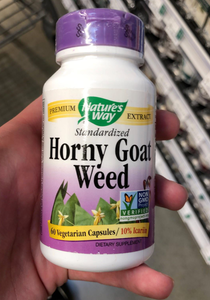
As a random example we picked because we like the name, consider horny goatweed, as a treatment for erectile dysfunction (ED). Along with the name, it also has a great back story, something about Mongolian herders observing goats getting aroused after grazing on it.
Horny goatweed is actually proven to work, though — and not just on goats. It also works on rats. For the rest of us mammals, there is zero evidence. Plus, ED is one of those conditions where, if something worked, we’d know about it by now.
At least the likelihood of harm is pretty low to other than your wallet.
4. There is no such thing as FDA approval for supplements
Supplements are notorious for lax quality control, unproven health claims, and contamination. Did we mention unproven claims? The FDA has no say in the matter of unfounded health claims.
It’s also not entirely clear that these pills contain the ingredients they claim to contain in the quantities they profess to contain. These supplements turn out to be much harder to manufacture to specs than regular synthetically derived pills.
5. They may interact with “real” drugs you are taking
Just because supplements are derived from natural sources doesn’t mean they don’t act like real drugs inside your body. And, like real drugs, they can interact with other drugs. For instance, if you are taking Vitamin E and Advil or Advil PM or a baby aspirin, your risk of bleeding profusely in an accident goes way, way up, because all are blood thinners. The risk isn’t just accidents — small everyday bruises may become big bruises.
Make sure you list supplements when describing to your doctor what you take…though it’s questionable whether (aside from the basics, like that blood-thinning example) the doctor would be aware of these interactions. There are too many to track, and some interactions simply aren’t studied.
It all comes back to this: a one-a-day multivitamin/mineral supplement is more than enough for most people. Not just for the benefits, but for avoidance of the risk of interaction, side effects and unknown long-term impacts.
6. There is one “supplement” that benefits almost every body system and has no side effects
You guessed it – exercise, the key to health and longevity. If there were a dietary supplement that provided even a small fraction of the benefits of exercise with none of the work, we’d know about it by now.

Share this:


2020 World Health Care Congress to Feature Wellness Debate!

This is a particularly timely issue because the EEOC is, even as we speak, drafting proposed rules defining “voluntary” to replace the 1984-type rules (where “voluntary” means “forced”) tossed out by a federal court in December 2018. There is a tension between protecting employee civil rights (as EEOC is tasked with doing) and allowing employers to fine employees (or move to high-deductible plans and then “incentivize” them to earn back their deductible) who don’t lose weight or otherwise toe the line. Or even to participate in these so-called “pry, poke and prod” programs, whose clinical value is dubious and often provide misinformation or violate clinical guidelines.
As noted in the link, key EEOC administrators have indicated they will be paying close attention to this debate. Further, the interest level extends to Capitol Hill. Democratic Rep. Jamie Raskin (arguably the most influential non-senior Democrat on the Hill) and Republican Senator Lamar Alexander (who runs the Senate committee that oversees health and labor issues), have already commented for the record on this debate.
Someone needs to show up to represent the “pro” side, though — or else the debate will be a rather one-sided affair. So far the invitation to debate has not been accepted — by the exact people who spend their entire lives looking for forums to spread their pro-pry,poke,and prod message.

Let me encourage them to show up by striking a conciliatory tone.
In the past, perhaps this column has not been respectful of my potential adversaries in this debate — the Health Enhancement Research Organization (HERO) and/or Ron Goetzel. However, I have great regard for them — when they tell the truth. For instance, Ron Goetzel endorsed Quizzify as being “a lot of fun and very clever,” (minute 42:57 of our last debate). And when he acknowledged I am the best peer-reviewer in the industry (minute 30:38). Or when he acknowledged that it requires 2-3 years to reduce risk by 1-2%.
I am also very very upset with The Incidental Economist (they are the New York Times’ economics bloggers). They referred to Ron’s analysis as — please excuse the technical jargon — “crap.” How dare they!
I also give HERO tremendous credit for admitting that “pry, poke and prod” programs harm employee morale and can damage corporate reputations (like Penn State). But most importantly, for admitting that wellness loses money. It’s a rare trade association honest enough to admit their product –and once again, pardon the technical jargon used in the lobbying industry — sucks. It took real candor and courage to do that, and it is much appreciated. I have great respect for integrity.
I will reciprocate by acknowledging the benefits of “pry, poke and prod.” Screening according to established clinical guidelines, though it won’t save money, is a good idea for long-term employee health — assuming someone is able to interpret the findings correctly and assuming the findings are accurate, and assuming they aren’t already getting too many checkups.
I look forward to matching wits with them next month.
You can see the full World Health Care Congress agenda here, and register here.
Share this:


New York Times features our solution to surprise bills!
Dear They Said What? Nation,

I think most of TSW Nation has already downloaded our custom consent to sign in emergency situations, in lieu of whatever they put in front of you. You can put this consent — along with some other helpful conversation-starters for other medical issues in doctor visits — right into your Apple Wallet. (Android users are out of luck until a future software update in which the Wallet App is added.)
Your Wallet should look like this (I mean, assuming you also bank at Bank of America)…

…and then tap where it says: “Billing Consent” to open this up:
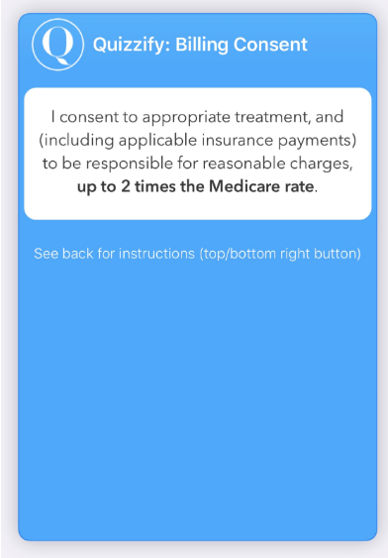
If you haven’t already done so, well, today’s New York Times should be enough to convince you.

We’d encourage you to read the whole shebang but we’d be lying if we didn’t say this is our favorite part:
But, by writing in their own limits, patients might have leverage in negotiations or even in courts if out-of-network payment disputes arise, or at least proof they didn’t agree to pay the total charges, say some advocates and legal scholars.
Patients who try this could still get hit with a large balance bill. But “the difference is you can say ‘I offered this, but they refused it,’” rather than signing the original agreement to pay all charges, said Al Lewis, chief executive of Quizzify, an employee health care education company, who is a proponent of setting your own terms.
He came up with the twice-Medicare benchmark, even putting suggested wording for patients to print and carry with them on downloadable wallet cards, because he says it’s an amount that’s defensible.
If a hospital later turns down “two times Medicare and it goes to court, their lawyer is going to say, ‘We could lose this thing,’” said Mr. Lewis.
And, while I will be very pleased to take credit for inventing the consent in question (no “fake news” in this article!), I do want to give shout-outs to Marilyn Bartlett, David Contorno and Marty Makary. They provided the peanut butter (reference-based pricing) and chocolate (“battlefield consents”) and all I did was combine them.
And thank you to Stacey Richter for being the taste-tester. I was pretty sure this should work, but she was the one who proved it would work. In the immortal words attributed to the great philosopher Yogi Berra: “In theory, theory and practice are the same. In practice, they’re different.”
Not this time.
Share this:


The two most useful free apps ever
Here at TheySaidWhat? World Headquarters, we pride ourselves in advising employers and employees what not to do. That’s our wheelhouse.
And for good reason. Apparently the opposite, our advice on what to do, sometimes backfires. For instance, our most popular post ever, with 12,000+ hits last year along, is an ironic guide to cheating in corporate weight loss contests. It was intended as a gag to show how worthless and harmful these contests are, but has apparently morphed a how-to manual for employees who want to do exactly that. Here are our stats for 2019. No other posting exceeded 6000 views.

Today, however, we are going to shake the what-to-do dice again…and present two tools that are powerful, ridiculously easy to use, free, and unique.
Measure your heart rate just by looking at your iPhone
This amazing app was invented by my former wife’s sister’s son. (Legally speaking, that makes him my ex-nephew-in-law.)
it;s called Hands-Free Heart Rate. All you do is look at it. Yes, just look at it. (You may need to take your glasses off, if that’s not too inconvenient.) And not even 30 seconds later (most of the time) it tells you your heart rate. heartrate@hedronvision.com is the contact info.
It’s also totally accurate. I’ve benchmarked it on the low and high ends to see if it works across the spectrum of potential heart rates. Pulse is at rest above. Then, the below screen shot is shown after being added to Apple Health. it captured the two data points immediately upon completion of my stair climb, and ten minutes afterwards.
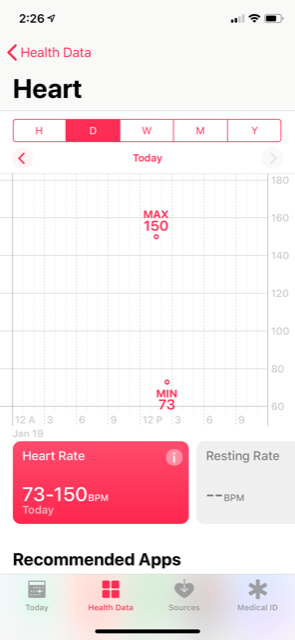
While the coolness factor is quite high, there is also cost-saving potential. Perhaps employees who score 60 or lower on resting pulse can opt out of annual screenings. Screens, however worthless they are when done every year on every employee (against the USPSTF guidelines), are even more of a waste of time and money on healthy people. And it’s fair to say that most people with pulses below 60 at rest are indeed healthy. Or if they aren’t, they have some kind of rare brachycardia issue that a wellness vendor likely can’t even spell, let alone identify. (Maybe wellness vendors should be required to undergo 6 days of training instead of 5.)
Just go to the app store and download it. You won’t be able to look away.
Conversation starters for doctor visits
1000 covered lives will generate roughly:
- 1 heart attack
- 1 admission for diabetes, and…
- 4000 doctor visits
And yet, how much more time, energy and money does your company spend on tilting at those two rare event windmills, which have never been avoided through wellness programs anyway (and vendors don’t track those event rates, so you don’t even know you failed) than on teaching employees how to talk to their doctor? Well, it turns out, there’s an app for that. Quizzify has updated the 5 Choosing Wisely questions that you are supposed to ask your doctor before any test or treatment…and made them downloadable right into your Apple Wallet.
Then, when you are actually in the doctor’s office for anything other than a checkup that you probably didn’t need, you have the questions to ask right on your person.
Of course, in virtually none of those 4000 doctor visits does anyone ever ask those questions, for one of three reasons, all of which are covered with this download:
- They don’t know them (check)
- They forgot to bring them (check)
- They are reluctant to question the doctor (check — see the PS below)
Beyond the basic Choosing Wisely questions (which Quizzify updated), you’ll find the app useful for surprise bill avoidance and for high-cost scans. Those are all freely available. Here is the short version of the Apple Pass for scans. On the back of the Pass is the “long version,” reminding employees of what they learned in Quizzify about why they want to ask these questions.

Long version excerpt (back of Pass)

This will be very useful…but nowhere near as useful as if it is combined with Quizzify’s standard curriculum, which teaches employees the importance of asking questions in a doctor visit. Quizzify customers can get these Apple Passes (and Android equivalents) for Humira, stents, back surgery, antibiotics, MSK procedures, and procedures generally. Basically anything that is controversial, high-cost and frequent. Employees shouldn’t Just Say Yes without understanding why — and whether — they should be saying yes.
Share this:


“A workplace wellness skeptic lets loose.”
Insurance Thought Leadership (ITL) has now picked up the thread. This will likely reach a lot more brokers and consultants.
As usual, I would like to caution that I am not a “workplace wellness skeptic.” There are some programs that have value — typically they are the ones validated by the Validation Institute. We also support “wellness done for employees rather than wellness done to employees.”
Nor are we anti-screening. We are only against inappropriate screening, which is bread-and-butter for many vendors. We are also against stupidity, dishonesty, abuse of employees. and force-feeding of broccoli. All of this puts us at odds with the Interactive Healths, Wellsteps, Goetzels and other actors in this field.
This interview has been insanely popular. I suspect it’s because I finally “let loose,” as the ITL headline says. Taking appellations and kicking posteriors.
So if you haven’t already read it, now is your chance…

Share this:

Surprise billing podcast!
Dear TheySaidWhat Nation,
Occasionally we like to provide actual useful information on what to do, as opposed to what not to do. If it seems like there is vastly more of the latter than the former, that’s because there is.
However, one dramatic gap in the useful information category is how to avoid surprise bills. We’ve written on this topic before, and even offered the free download into the Apple Wallet, as well as cards to be placed strategically where emergencies are most likely. Bikes and motorcycles come to mind. Parachutes as well but if you skydive, you probably have already negotiated a volume discount with your local ER..
This podcast covers some essential elements of our surprise billing solution. Examples:
- Why only emergencies?
- Why does this solution not work in some free-standing ERs…but works in others?
- Why do we set the consent at 2x Medicare instead of 1x or 3x?
PS As long as you are going to be downloading useful tools into your Apple Wallet, might as well add these 5 Questions to Ask a Doctor before any test or procedure.

 They Said What?