
Blog
The Most Likely “Answer” to the Nutrition Debate
For years, people have been arguing:
(1) Whether you should limit your saturated fat or limit your carbs and not worry about the saturated fat;
(2) How much salt you should consume.
On the first, if we had to pick, we would choose the Gary Taubes/Nina Teicholz side, which is that poor quality carbs (refined flour, white rice, and sugar), not fats or even saturated fats, are the bad guys for most people. On the second, we quite firmly believe that for most people without high blood pressure, salt is fine in moderation.
However, we have two perspectives, overall, that get very little attention.
Perspective #1: the lack of clear evidence is, by itself, evidence
If indeed the impact were large one way or the other on either fats/carbs or salt/no salt, we would know it by now. There is a rule of thumb in epidemiology that big effects require only small sample sizes to reveal themselves. For example, the Freis study (which, by the way, I found a mistake in–and if anyone doesn’t believe me I’ll send them the thank-you note from NIH) required only 573 veterans to conclude that very high blood pressure caused strokes. And doctors and tobacco companies knew smoking caused lung cancer way back in the 1940s, after observing only a few hundred cases.
By contrast, tens of millions of people have been observed, hundreds of thousands have participated in (usually loosely) controlled trials…and yet there is no consensus, no clear direction of the evidence. There may be a diet that is better than other diets–but for most people the composition of the diet probably doesn’t matter much within reason, beyond avoiding junk food.
Consider three things that DO matter: exercise, smoking, and sugar. (We say “sugar” as opposed to carbs generally. Carbs generally probably do matter for most people, but that statement would take us out of certainty into opinion.) The evidence is quite overwhelming on all three of those things. If you exercise, don’t smoke, and partake of a generally healthy diet low in sugar, you’ve achieved the “80-20 rule” for good health…and we don’t know what the other 20 is.
And even this 80-20 rule (except for smoking) is likely overwhelmed by factors that are beyond your control, like family history. We all know smokers who lived forever, people who “did everything right” who died young etc.
Perspective #2: Why do we assume that the answer is the same for everybody?
Note that we said “for most people” several times above. That was not an accident. One size probably does NOT fit all. (Coincidentally, another blogger wrote on this exact topic this morning, related to obesity.)
Humans differ in many ways. Why do we assume there is a “right answer” in the case of diet? Isn’t it possible that people whose ancestors evolved in the tropics react differently to different foods than people who evolved in very cold climates? It’s certainly true for salt. Ethnic groups and races evolving in climates with cold winters needed to salt their foods to preserve them. They ended up consuming far more salt than we do today. Salt was the world’s most important traded commodity for centuries. Invading armies would take over the salt works. “Salzburg” was even named after salt. Conversely, ethnic groups and races from the tropics had year-round access to food, preservation wasn’t an issue…and now African-Americans in particular have high rates of hypertension.
Likewise, dairy. Lactose intolerance varies widely by global region. For example, people of Northern European descent have evolved to have a much lower likelihood of lactose intolerance than people of Asian descent, which has implications for nutrition status and hydration status. However, even amongst people who suffer from lactase deficiency, many can still drink milk in small amounts and consumption of fermented milk products, such as yogurt and buttermilk, can help them get the benefits of milk without the discomfort.
So why wouldn’t variations like this be true for many other dietary components? Why wouldn’t some people fare better on a high-fat diet while others do better with more carbs? Why wouldn’t it be true that as long as overall diet quality and calorie content are within generally healthy parameters there are quite possibly millions, even tens of millions, of healthy ways to eat? John P. Ioannidis of Stanford, easily the leading thinker on medical research today, makes this point exactly in his piece published this week in the American Journal Of Clinical Nutrition, in which he criticizes not only the conduct of nutrition research, but the flawed conclusions that all too many people draw from this stilted and often irrelevant body of literature.
Where does this take us?
Naturally, these conclusions invalidate the business model of most of the wellness industry. Vendors tend to demonize one type of food or another. For years they were advocating low-fat diets (and finding huge savings). Now they are advocating low-saturated fat or low-carb diets. It doesn’t matter which, because the savings are always huge, in wellness. (The irony, of course, is that in the working-age population, most medical spending is unrelated to diet.)
There is ONE THING that OVERWHELMS the impact of everything else on health, that is NOT OPEN TO CONTROVERSY. That, of course, is exercise. A little is better than none, some is better than a little, and within reason a lot is better than some. But many wellness vendors would have us believe there are shortcuts to good health, that coincidentally are profitable for them. Crash-dieting contests, like HealthyWager’s, are one example. Other vendors advise us to micromanage our diets, often with a level of blatantly incorrect certitude, as in this Cerner example:
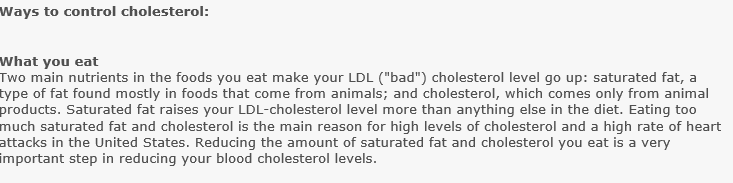
These distractions have employees and HR people believing there are automatic shortcuts to good health, when there are none. Exercise is a commitment, not a shortcut. but it is a way to good health. Just not one that is likely to make wellness vendors a lot of money.
Worse, once the wellness apologists admit that all this lowfat/crash-dieting stuff is nonsense, it means their entire history of savings claims based on those initiatives becomes one big lie. So you can bet that crash-dieting contests and bad diet advice will remain staples of the wellness industry, right up there with annual checkups and overscreening.
Share this:

Opioids are the opiates of the masses: how wellness vendors failed us yet again
If there is one thing that has directly impacted the health and productivity of many workers over the last ten years that was to a large degree predictable, avoidable, and remediable, it would have been opioid use.
So naturally, the workplace wellness industry (along with most wellness-obsessed insurance carriers and the equally wellness-obsessed CDC, the subject of a future posting) missed it altogether. Health risk assessments (HRAs) asked lots of questions and gave lots of advice about drinking and illegal drug use. But opioids were generally obtained legally, with prescriptions, and reimbursed through PBMs…and rarely if ever found their way into HRAs.
The wellness industry ignored opioids in every way possible. They thought it was much more profitable and less controversial to tell employees to eat less saturated fat and, of course, salt. And of course get annual physicals and prostate checks.
We talk about the those direct harms of “pry, poke and prod” workplace wellness all the time. However, the indirect harm was equivalent: we were taking our eye completely off the opioid ball.
I encourage everyone to read the full article here.
*In defense of the wellness industry, since most employees lie when they answer those HRA questions and/or ignore the advice, it is possible wellness vendors would have had as trivial an impact on opioid use as on everything else they address. However, they could have at least tried.
Share this:

Between the picnics and parades this weekend, you’ll no doubt be saying to yourself…
“Let’s make this a real family holiday weekend. Boys and girls, let’s listen to blogtalkradio.”
Well, if you insist. Here is the link to the interview Fred Goldstein just did with me on Gregg Masters’ show.
And if you ever get a chance to go on the show or advertise on it, take it. Check out the little icon that we web administrators see in the upper LH corner of our screens. We usually get a lot of visitors (way over 100,000 in our existence, and 5130 followers) but the hour when the podcast was live is our best-ever hour, and makes our typical hours look pretty trivial by comparison.

Share this:

A 14 Year Old Girl Teaches Wellness Vendors How BMI Works
We often point out that the average eighth-grader knows more about math than wellness vendors do. But that’s OK. No one expects wellness vendors to know math better than an eighth-grader. However, we do expect them to know wellness better than an eighth-grader. But it turns out at least one eighth-grader also knows more about wellness than wellness vendors do.
Within the last few months, we and others have explained to wellness vendors why their obsession with BMI is misguided in many ways. It turns out that BMI misses both people who are healthy but fat, and people who are unhealthy but thin. No surprise, given that BMI was invented by a 19th century mathematician more concerned with measuring whether populations as a whole were not getting enough food than whether individuals were getting too much.
Now, along comes an Indiana teenager to teach wellness vendors about the other harms of BMI — what it does to people’s body images. She was classified as obese, and yet she is a high school athlete. You and I should be so healthy:
A 14-year-old girl who carries 175 pounds or more on a 5-foot-7 frame, such as Tessa’s, falls into the obese range, regardless of how muscular her frame may be. Earlier this year, Tessa writes, she started having doubts about her body — not unheard of for a teenager. She recounts wrapping Ace bandages around her stomach to make her look slimmer.
Her essay is reproduced here:

So we ask vendors, why? Why do you insist on using a metric that is less than worthless? The employed population (not to mention the employers who pay for this stuff) gets no benefit from this. And as this article describes, BMI obsession creates a body-image issue as well.
There is also the slight problem that — assuming for the sake of argument that BMI is a worthwhile measure:
- Koop award-winning programs can’t reduce it;
- a wellness vendor (Vitality) can’t reduce it on their own employees;
- and Aetna spent $500/employee but didn’t reduce it.
I realize that, as wellness vendors, you need to find some way to snooker employers and show employees who’s boss, but can’t you come up with something that doesn’t actually harm people and might possibly have a chance of working?
Share this:

Ironically, the wellness industry doesn’t understand irony.
The wellness industry is about nothing if not irony. Ironically, wellness vendors and consultants don’t understand irony, so they keep doing and saying things they think are being taken seriously. Ironically, they are being taken seriously, but only by students of irony.
For example, these wellness people don’t understand that it is ironic that employees can be forced to submit to “voluntary” wellness programs, or face fines of thousands of dollars. They say this unabashedly. Whereas when we make an ironic comment, such as: “Wellness vendors make employees happy whether they like it or not,” we do it deliberately.
The May issue of Managed Care displays a cornucopia of unintended irony, in a debate between myself and Harris Allen, of Navistar fame, on the effectiveness of wellness programs in preventing diabetes.
Speaking of Navistar, Mr. Allen was already famous for irony before this debate. He showed Navistar how to claim a wellness ROI of 400-to-1, later reduced to 40-to-1, before jumping again to 400-to-1. That by itself — adding/removing extra zeros in your ROI but claiming it’s real the whole time — is ironic, but that’s not even the ironic part. The irony is that he was concocting these figures even as Navistar itself was making up $4-billion of phony shareholder equity, perhaps including these wellness savings. A lot of the perps (excluding Harris) are ending up in jail over this caper. Ironically, despite his pride in his work on wellness for Navistar, he didn’t cite their results in his counterpoint.
Not being Navistar shareholders ourselves, we found this whole escapade highly amusing, so it is recounted in This Is Your Brain on Wellness, our humor column.
Back to the debate irony. The irony is that, in his attempt to justify wellness, he cited two examples that lead to the opposite conclusion. First, he cited US Preventive Medicine (USPM). USPM did indeed achieve an excellent result, and it is validated by and displayed by the Validation Institute. On that everyone can agree. I myself just wrote a column praising their performance. The thesis of the column: “See, not every wellness vendor fails.”
He cites that exact same company and exact same validation to conclude: “See, wellness vendors can succeed.” Yeah, one wellness company has succeeded while the staggering number of failures — companies that couldn’t get validation or didn’t even bother to apply — is in the thousands, a statistic I noted just yesterday.
Using the same logic as Mr. Allen, one might profile Powerball winners and say: “See? Powerball works.”
The other irony is that he cited the Koop Award-winning companies as examples of successes in preventing diabetes, when — according to their own applications — they basically failed. Ironically, I also cited that very same award in my argument. Specifically, McKesson won an award for preventing diabetes even though its employees’ glucose and BMIs increased. Mr. Goetzel’s and his Koop Award committee cronies never been much for fact-checking, even when the facts are right on the application itself:
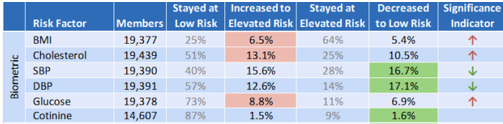
The final irony is that Mr. Harris ends his argument with a call for “evidence-based” wellness programs. Ironically, the “evidence” is overwhelming…in the other direction: wellness programs have not avoided a single wellness-sensitive medical admission, according to US government figures. The green line below represents the wellness-exposed population while the red line represents the rest of the country. There is no separation, meaning that the wellness-exposed population has achieved zilch.
Actually, there is slight separation –but ironically it goes the other way. You’d statistically be better off not being exposed to wellness.
This graph is part of my proof of the ineffectiveness of wellness vendors, and allows me to offer a million-dollar reward to anyone who can show wellness doesn’t lose money.
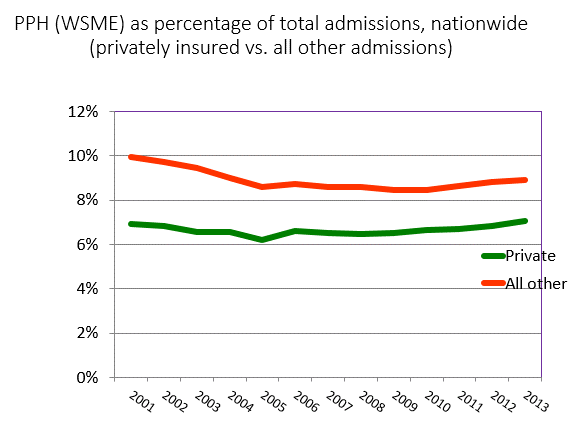
Where did the government get the data for this graph? It was compiled by Truven Health, the division of IBM that — you guessed it, ironically — employs Mr. Goetzel.
Share this:

New Wellness Book Costs $5400 (but that includes shipping)
It seems like wellness economics are the opposite of regular economics. The more expensive the books, the less accurate they are. My books–Surviving Workplace Wellness, Cracking Health Costs, and Why Nobody Believes the Numbers — are completely accurate, in that readers have purchased more than 13,000 copies and reported no mistakes. (There actually is an inconsequential division mistake in a sidebar in Why Nobody Believes but I seem to be the only one to have noticed.)
In total, those books cost less than $100.
Or, you could “upgrade” to the IBISWorld report for $895 and read literary gems like:
Wellness firms may offer employers stress management courses and sessions that offer music therapy, aromatherapy, Tai Chi, and post disaster stress reduction through coaching.
Or:
Government-funded initiatives that promote wellness to cut costs related to chronic ailments (e.g., obesity and diabetes) has further exacerbated many businesses movement toward purchasing corporate wellness services.
And my favorite:
The industry provides wellness programs to businesses across the United States, including small, medium and large businesses in the private sector and businesses in the public sector.
“Businesses in the public sector”? I realize many of our legislators are for sale but I didn’t know they had incorporated.
A full review of the IBISWorld tome, “New Report Raises the Bar for Cluelessness in Wellness,” can be found here.
And now may I introduce The Global Market for Population Health Management, 2016. Before you mortgage your firstborn to fork over $5400 for this one, I would suggest reading the “highlight” that they were kind enough to put right on their website.

The “global economic burden of chronic disease” rising to $240-trillion would be quite a feat, given that total global economic output itself is only about $70-trillion. However, macroeconomics might be the opposite in wellness too.
The triple-digit IQ crowd will be most surprised to learn that:
At the same time, suppliers are deterred from entry or expansion due to success-based compensation models, global recession-based pricing pressures and the consequent perception of low margins.
Vendors are “deterred from entry”??? So the world is suffering from a shortage of wellness vendors? That might be news to the thousands of HR departments who get pestered by these vendors on a constant basis. Try googling on “empower” and “wellness.” You’ll find seven companies with some variation of those words in their name. A good rule of thumb is that an industry in which seven companies have the same name is not suffering from a vendor shortage.
Quite the opposite, the industry has so many vendors that it is literally running out of names. There is an “Interactive Health” and a “Healthy Interactions,” a “Wellness Corporate Solutions” and a “Corporate Wellness Solutions.” In addition to running out of names, the industry is running out of non-names, so they end up with letter combinations more closely associated with Scrabble tiles, such as “Dacadoo.”
Mr. McGrigor attributes this shortage to two factors.
First, “success-based compensation models” are holding the industry back. In other words, the reason wellness vendors are failing is that they can’t succeed. As an aside, Quizzify has a success-based model. We are often asked why we offer such a model when wellness vendors don’t, as though guaranteeing success is a bad thing. So Mr. McGrigor has it the opposite of the way it is: buyers assume wellness vendors will fail, and look askance at those that guarantee success.
Second, vendors are “deterred from entry” because of the “perception of low margins.” For $5400, an author should be required to understand basic economics. It’s just the opposite of what Mr. McGrigor says. As I used to explain to the students when I taught economics at Harvard (you knew I would work that in), the price of milk isn’t low when the price of cows is low. The price of cows is low when the price of milk is low.
So if wellness margins are low, it’s not because vendors don’t want to enter the market. It’s because the world is drowning in a sea of “empowered” wellness vendors.
One place margins are not low, though, is in books telling everyone how great the wellness industry is. However, there is another rule of thumb in economics too: you could have the highest margins in the world but you still won’t make any money if you have no understanding of the subject matter you are writing about.
Unless he is banking that wellness economics are the opposite of everything else, which history suggests isn’t such a bad bet.
Share this:

Top Ten Reasons to Tell Wellness Vendors to “Just Walk Away”
Jon Robison just posted the best-ever summary of arguments against “doing wellness to employees” that I’ve seen. He summarized and invalidated all the nonsense in about 600 words (admittedly including a bunch of links, to this site and others).
However, the posting was unbalanced. He left out the best argument in favor of undertaking a “pry, poke and prod” program, the more comprehensive, the better. If you are located in “Silicon Alley” in Manhattan, compelling your employees to participate in a “voluntary” program will inspire some of them to quit, because it will be perfectly obvious to them that management has no idea how to treat valuable employees.
Then Quizzify can hire them…and we don’t care what they weigh.
Share this:
We hope you hate our new Pulse posting

A word means whatever I want it to mean, neither more nor less.”
–Humpty-Dumpty
Like George Orwell and Humpty Dumpty, the wellness industry (thanks largely to the Business Roundtable pressuring the EEOC) has now managed to redefine wellness programs as their opposite: “voluntary” now means “required,” in the sense that if you don’t volunteer to submit to “wellness or else” you could be fined up to about $3600 (if you spouse is on your insurance), which is a little less than 10% of the median annual wage, and exceeds the amount in many people’s savings.
But the wellness program is still voluntary, according to the EEOC. Or as Surviving Workplace Wellness says: “wellness programs will make employees happy whether they like it or not.”
These wellness people have experience at redefining words as their opposites. Health Fitness Corporation’s Dennis Richling redefined “514 Nebraska state employees didn’t have cancer at all” to “we made life-saving catches of 514 employees with cancer.” He referred to this subtle difference as “semantics.”
Jon Robison and I just posted a “Pulse” on the wellness industry’s creative use of the English language, which rivals their creative use of fifth-grade math.
We hope you hate it, where “hate” means “love.”
Share this:

Business Roundtable Bludgeons EEOC into Allowing Employers to Require Genetic Information
In a deep dark recess of today’s Federal Register, large corporations just quietly received permission to “play doctor” with their employees. They can now impose even more draconian and counterproductive wellness schemes on their workers than they already do. Their hope is to claw back a big chunk of the insurance premiums paid on behalf of employees who refuse to submit to these programs, or who can’t lose weight.
A Bit of Background on Wellness
The Affordable Care Act (ACA) allowed employers to force employees to submit to wellness under threat of fines. Specifically, the ACA’s “Safeway Amendment” — named after the supermarket chain whose wellness program was highlighted as a shining example of how corporations could help employees become healthier — encouraged corporations to tie 30% to 50% of the total health insurance premium to employee health behaviors and outcomes. (As was revealed while ACA was being debated, Safeway didn’t have a wellness program. The fictional Safeway success was a smokescreen for corporate lobbyists to shoehorn this withhold into the ACA.)
Once this 30% to 50% windfall became apparent, many corporations figured out what this vendor (Bravo Wellness) advertised: there is much more money to be made in clawing back large sums of money from employees who refuse to submit to these programs than in improving the health of employees enough to allegedly reduce spending many years from now. “Allegedly” because–unlike simply collecting fines or withholding incentive payments–improving employee health turns out to be remarkably hard and ridiculously expensive to do, so hard and expensive that:
- The entire wellness industry has not avoided even a single heart attack or case of diabetes, statistically speaking, according to data compiled by a wellness consulting firm for the federal government;
- The only wellness company willing to release results of its own wellness program on its own employees,admits the program failed;
- Even the employerswhose wellness programs have won awards as the best in the field have made only trivial improvements in employee health.
Most importantly, the complete lack of regulation has allowed the wellness industry and health plans to expose employees to significant potential harms, in order to maximize revenues.
The Federal Government Green-Lights “Wellness-or-Else” Programs
There are no regulations, licensure requirements or oversight boards constraining the conduct of wellness vendors, and only one agency — the Equal Employment Opportunity Commission (EEOC) — providing any employee recourse. The Business Roundtable has taken on the latter at every opportunity. First they threatened President Obama that it would withdraw its support for ACA unless he declawed the EEOC. Then they held sham Senate hearings entitled: “Employer Wellness Programs: Better Health Outcomes and Lower Costs.” Finally, they threatened to push the“Preserving Employee Wellness Programs Act” to eviscerate the EEOC’s protections legislatively.
But it turns out the legislative end-around wasn’t necessary. The EEOC has now caved in. These programs are defined as “voluntary,” and yet as of now, employees can be forced to hand over genetic and family history information, or pay penalties. So, as in 1984, where “war” means “peace,” employees can be required to voluntarily hand over this information.
Let’s be clear. This isn’t about employee wellness programs, which don’t work. It’s all about the penalties. Genetic information is worthless in the prevention of heart disease and diabetes, as Aetna just showed in a failed experiment on its own employees.
Knowing family history does have some predictive value, but it is unclear how employees are going to benefit from employers collecting it. Self-insured employers could either fire the employee or do nothing. Neither is useful for the employee. If the employer is fully insured, this information is akin to a “pre-existing condition” in the old days. The employer’s premiums will increase as long as employees with bad family histories remain on their payroll.
The Good News, Part 1: Corporations Wising Up
The Business Roundtable, and their friends at the US Chamber of Commerce, might want to connect their computers to the internet. It turns out that many companies are finally realizing that compelling employees to submit to medical screens just to claw back some insurance money isn’t worth the morale hit.
Increasingly, employers are learning that what the national data shows is also true for themselves: these programs simply do not work. For example:
- The prestigious journal Health Affairsconfirmed previous analysis that fining or bribing employees to lose weight is a waste of time and money;
- The state of Connecticut, also in Health Affairs, admitted that their program has caused coststo increase;
- The Health Enhancement Research Organization (HERO), the wellness industry’s trade association, admitted wellness causes such massive cost increases that it loses money–even when HERO acknowledges fabricating data to try to show savings.
And the morale hit? A formerly obscure faculty member who led the successful employee revolt against the Penn State wellness program just got elected president of the Penn State Faculty Senate–largely because employees were so grateful to him for his leadership in that revolt.
The Good News, Part 2: Wellness For Employees
As a result, many companies are deciding that clawing back some insurance money isn’t worth the damage done to their workforces. They are replacing “wellness done to employees” with “wellness done for employees.” These companies are improving the built environment, upgrading their foodservice, encouraging fitness, or simply adding features to the health benefit like paternal leave or financial counseling. They might still hold a “health fair” every now and then, but their medical tests are conducted infrequently–according to actual clinical guidelines–instead of allowing vendors to screen the stuffing out of their employees to find diseases that don’t exist.
Or they are actually focusing efforts where they can make a difference, like steering employees to safer hospitals or educating employees on how to purchase healthcare services wisely. (Disclosure: my own company, Quizzify, is in the business of teaching employees how to do the latter.)
Notwithstanding this disruption and regardless of the harms it has caused, the $7-billion wellness industry has excelled in perpetuating its own existence. Industry “thought leaders” recently proposed a scheme to encourage companies to disclose how fat their employees are–and have even managed to get a few large employers to sign on to it.
The sheer audacity of that scheme and complete disregard for its consequences on overweight employees means the war on “voluntary” wellness-or-else programs is by no means over. Like every other industry threatened by reality but supported by deep-pocketed allies like the Business Roundtable, the wellness industry can rely on the government to delay the inevitable.
Consequently, it might be quite some time before the inevitable course of reality overcomes the wellness-or-else pox on the healthcare system.
Share this:
NIOSH Publishes Groundbreaking “Total Worker Health” Agenda
NIOSH is the National Institute for Occupational Safety and Health. It is part of the Centers for Disease Control and Prevention. Their charter is the opposite of the wellness industry’s, and can best be described as a focus on the health of workers, rather than on the health of workplace wellness vendors. That puts me and them (meaning NIOSH) in total alignment.
They recently published their workplace safety and health agenda for the next 10 years. Readers can either read these highlights, a longer summary, or the actual report, entitled: A National Agenda to Advance Total Worker Health® Research, Practice, Policy, and Capacity.
By way of background, since the federal government became actively involved in workplace safety 43 years ago, deaths in the workplace have fallen by about two-thirds, while the size of the workforce has doubled–meaning the death rate is down about more than 80%. To put this in perspective, the entire age-adjusted death rate overall during this period has fallen by less than half. Plus, the reductions in the latter rate are concentrated among the very young and very old, not so much working-age people.
Lately, of course, death rates in one of NIOSH’s target populations have been rising–making the workplace mortality improvement even more striking.
The improvement is multi-factorial. Yes, NIOSH and OSHA regulations, oversight, inspections and penalties are partly responsible. But reputation, safety features, technology, offshoring of “dirty” work, and fewer inherently dangerous jobs (like coal mining) also contribute. Note that the improvement in the overall age-adjusted death rate has also benefited from similar major favorable trends. Yet the workplace death rate reduction has far outpaced the general decline.
On the other hand, there remain 3-million workplace-related injuries and illnesses/year, meaning the task is still at hand. And unlike heart attacks and diabetes, many of these injuries and illnesses can actually be prevented by the employer.
The centerpiece of the NIOSH Total Worker Health agenda is that the workplace should be a safe and healthy place. Employees should be safe from accidents, hazards, chemicals, bullying and other “risk factors in the workplace that contribute to common health problems previously considered unrelated to work.”
The report calls for “risk assessment and risk management” in the workplace. That is, of course, exactly the opposite of what’s done by the wellness industry, which could never be confused with MENSA. They (meaning the wellness industry) continue to flog the same discredited, worthless “biggest loser” and “pry, poke and prod” programs despite the overwhelming evidence that these programs contribute to, rather than ameliorate, risks and hazards and stress in the workplace–and of course lose money.
As a wellness professional, you should read the section: “Issues Relevant to Advancing Worker Well-Being through Total Worker Health.” That, my friends, (plus Quizzify, which does address worker health) should be your agenda for the next 10 years, just like it’s theirs.
The report goes on to specify how NIOSH and their collaborators are going to address this agenda, but the gist is in that one section.
Along with what the NIOSH report does advocate in its 10-year agenda, it’s important to note what it doesn’t advocate: conventional “pry, poke and prod” wellness.
One can only imagine the political pressure NIOSH had to withstand in order to avoid turning this outstanding document into a paean to wellness, or at least including a section on wellness–or at least a few passing mentions of the word, which doesn’t appear once. Likewise “screenings,” “health risk assessments,” and any form of crash-dieting weight-loss initiatives are also omitted.
Why do I infer “political pressure”? Because NIOSH’s overlords are the CDC. Having allowed Ron Goetzel to paint them into the wellness corner, they are doing exactly the opposite of NIOSH: in order to try to prop up their wellness friends, they are doubling down on demonizing chronic disease. Using a round-up-twice-the-number-of-usual-suspects approach to biostatistics, they recently and inexplicably bumped their previous mantra of 75% of healthcare spending being on people with chronic disease up to 86%.
How? Simple: among other things, that figure includes someone with allergies having a baby or breaking a leg. Naturally vendors take advantage of their trademark innumeracy to further misinterpret the CDC’s already-fictional figure as “86% of spending is due to chronic disease.” Neither 86% nor even 75% makes any sense whatsoever as a practical matter, and long ago we debunked the 75% as healthcare’s biggest urban legend.
This isn’t the first time the CDC’s numbers haven’t added up. These are also the people who are horrified both that “7 out of 10 deaths are due to chronic disease” (that’s called “civilization,” folks) and that a shocking 20% of children are at or above the 95th percentile for weight.*
And yet, these are the same people who wiped out malaria in the US, smallpox worldwide, (eventually) helped contain the spread of AIDS, and possibly prevented a domestic Ebola mini-epidemic.
So here’s a modest four-part proposal. The CDC should:
- Let NIOSH take the lead on total worker health;
- Let me take the lead on fifth-grade arithmetic;
- Let Mr. Goetzel take the lead on delaying the wellness industry’s asymptotic decline into irrelevance; and instead
- Do the one thing they know how to do very well, which is keeping people alive.
*Yes, we know what they meant. The growth charts were developed in 1979 (as it happens my very own uncle, Dr. Michael Lane, led the project, after he led the smallpox eradication project). They meant to say that 20% of today’s kids would be at or above 1979’s 95th percentile. But that’s not what they did say.
Ironically given the Chicken Little-esque histrionics in the CDC’s other bogus claims, this particular observation would have actually been both dramatic and compelling — if they had only managed to get it right.
 They Said What?